How the Hippies Found Ibiza: A Short History
Everything you need to know about how the hippies found ibiza: a short history in Ibiza — practical info, local tips and where to go next.
Echoes of Freedom: Ibiza's Unlikely Embrace of the Hippie Movement
Long before superclubs dominated the skyline and luxury mega-yachts dotted the turquoise bays, Ibiza was a quiet, unassuming island, a forgotten outpost in the Balearics. Its magnetic pull, however, was already brewing, a latent energy waiting to be discovered by a generation yearning for authenticity, freedom, and a break from conventional society. The story of how the hippies "found" Ibiza isn't one of accidental stumbling; it's a tale woven with counter-cultural philosophy, global currents, and the unique, almost mystical, ambiance of the island itself. It's a journey from the sun-drenched beaches of California and the psychedelic pavements of London to the pine-scented hills and pristine coves of the White Isle, culminating in a cultural fusion that would irrevocably shape Ibiza's identity.
The Post-War Canvas: A World Ripe for Rebellion
To understand the hippie migration to Ibiza, we must first understand the world they were escaping. The 1950s had been a decade of conformity and consumerism in the West, largely fueled by post-World War II economic booms. By the early 1960s, however, a simmering discontent began to boil over, particularly among the youth. The Cold War, the threat of nuclear annihilation, the Vietnam War, and pervasive social inequalities ignited a desire for peace, love, and a radical reimagining of societal norms. This burgeoning counter-culture found its early voice in the Beat Generation and burgeoning folk music scenes, but it truly blossomed into the global phenomenon of "hippiedom" by the mid-to-late 1960s.
The search for alternative lifestyles led many young people – artists, musicians, writers, free-thinkers, and wanderers – away from the perceived phoniness of urban life. They sought communion with nature, spiritual enlightenment, and communities where individual expression was celebrated rather than stifled. Destinations like Goa, Kathmandu, and Marrakech became mythical hubs on the "Hippie Trail," but Europe also offered its own sanctuaries. Islands, in particular, held an almost irresistible allure: their isolation offered a sense of escape, their natural beauty promised serenity, and their slower pace of life provided a stark contrast to the relentless march of industrial society. It was into this fertile ground that Ibiza, almost by serendipity, was about to be planted.
Ibiza's Unique Appeal: More Than Just Sun and Sea
What drew these intrepid souls to a relatively undeveloped Spanish island? It wasn't the promise of modern amenities or vibrant nightlife, which simply didn't exist then. Instead, Ibiza offered a rare confluence of factors that resonated deeply with the burgeoning hippie ethos.
Firstly, its relative obscurity. Compared to the French Riviera or other established European holiday destinations, Ibiza was largely off the radar. The Franco regime had kept Spain relatively isolated, and the Balearic Islands were still largely agrarian and fishing communities. This meant fewer rules, less infrastructure, and a palpable sense of freedom from the pressures of mainstream society.
Secondly, the cost of living was incredibly low. For those with little money and a desire to live simply, Ibiza was a paradise. Land was cheap, food was fresh and local, and basic living expenses were minimal. Many lived in abandoned fincas (traditional farmhouses), built makeshift homes on the hillsides, or simply camped on the beaches for extended periods.
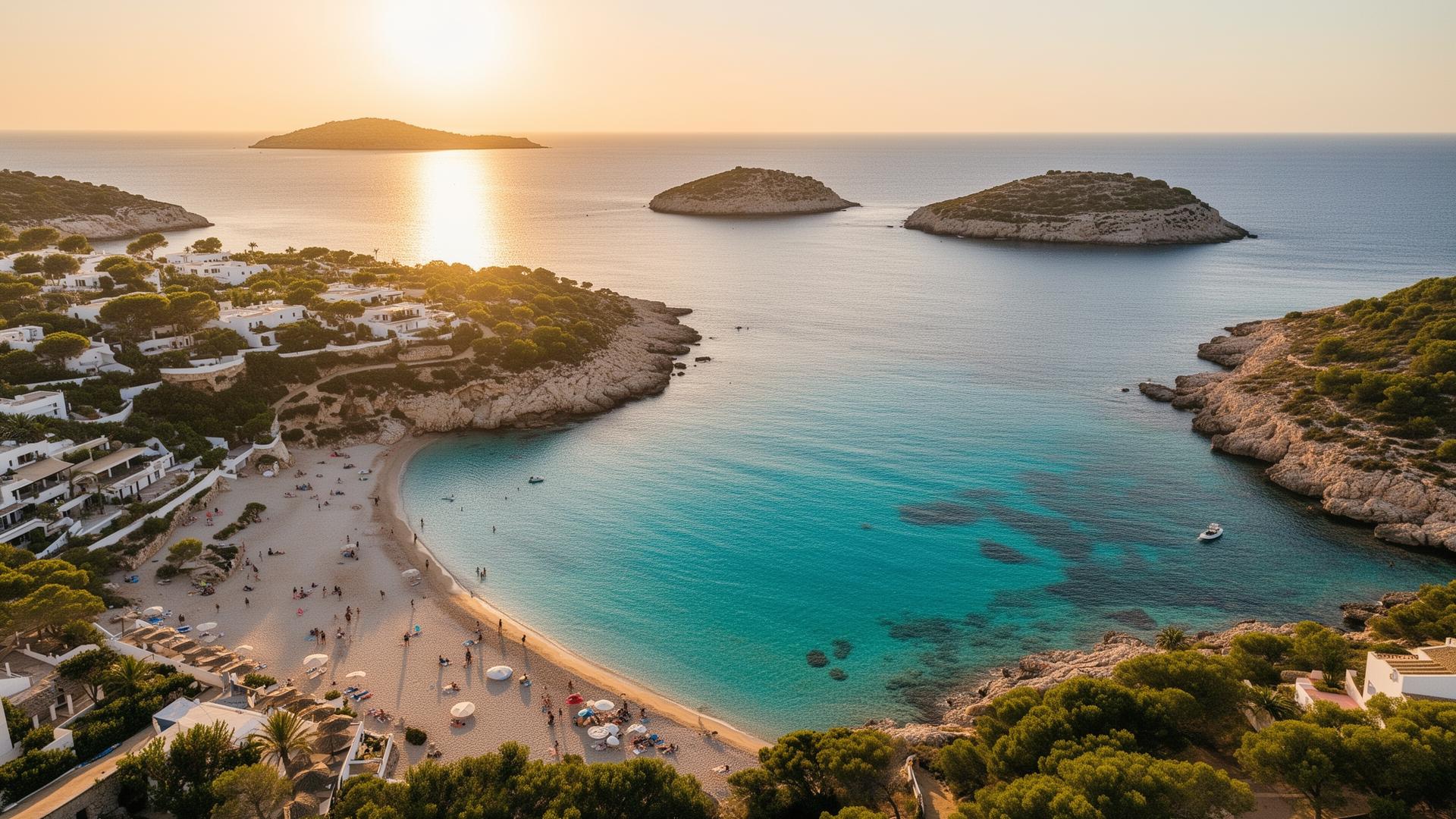
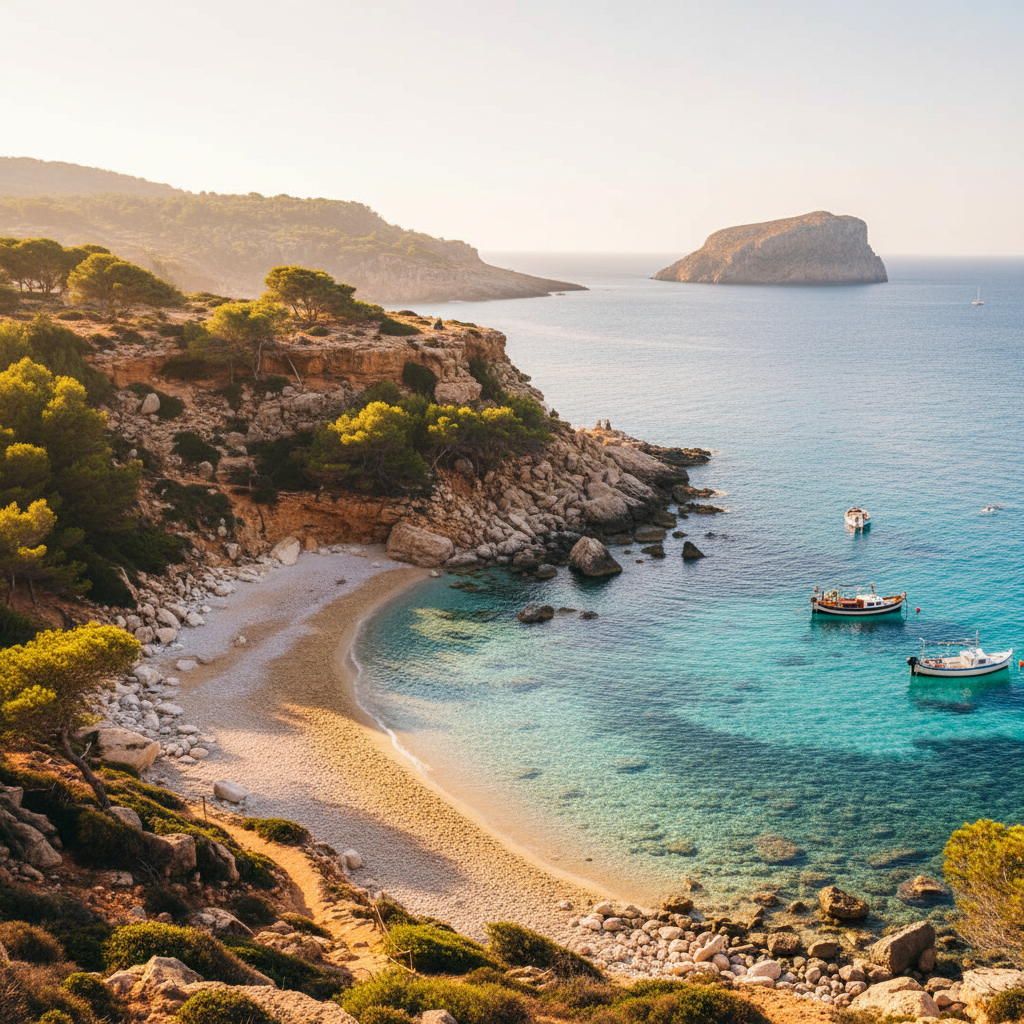
Thirdly, and perhaps most profoundly, was the island's natural beauty and energy. Ibiza possessed an almost primal magnetism. Its dramatic cliffs, hidden coves like Cala Llentrisca and Es Portitxol, fragrant pine forests, and the almost spiritual sunsets over Es Vedrà captivated those seeking a deeper connection to nature. The light itself, a particular kind of ethereal glow, seemed to infuse the landscape with a sense of possibility. Indigenous Ibicenk culture, with its ancient traditions and reverence for the land, also contributed to an atmosphere of timelessness that appealed to those seeking an antidote to rapid modernity.
Lastly, and crucially, was a prevailing sense of tolerance. While Spain under Franco was generally conservative, Ibiza, particularly its smaller villages and scattered communities, cultivated a surprising openness. Perhaps it was the island's long history as a crossroads of civilizations, its geographic isolation fostering a live-and-let-live attitude, or simply the pragmatic acceptance of newcomers who weren't causing trouble. This atmosphere allowed disparate groups to coexist, from eccentric European artists who had settled there in the 40s and 50s, to local Ibicencos, and now, the incoming hippies.
The Early Arrivals: A Trickle Becomes a Stream
The first wave of true counter-cultural explorers began arriving in the late 1950s and early 1960s, predating the mainstream explosion of hippie culture. These were often European artists, writers, and intellectuals fleeing rigid societal expectations. Figures like the German artist Erwin Bechtold, who arrived in 1954, or the Dutch abstract painter Miquel Fluixà arrived seeking inspiration and solitude. They laid some groundwork for an "alternative" community, but it was the mid-1960s that saw the influx of individuals directly aligned with the burgeoning global hippie movement.
They came from all corners of the globe: Americans seeking to avoid the Vietnam War draft, British artists and musicians drawn by the island’s bohemian reputation, Germans seeking a spiritual awakening, and Dutch wanderers on overland journeys. Many arrived via overland routes, hitchhiking across Europe, or by ferry from Barcelona or Valencia, landing in Ibiza Town's bustling port. The journey itself was an integral part of the experience, a shedding of old skins.
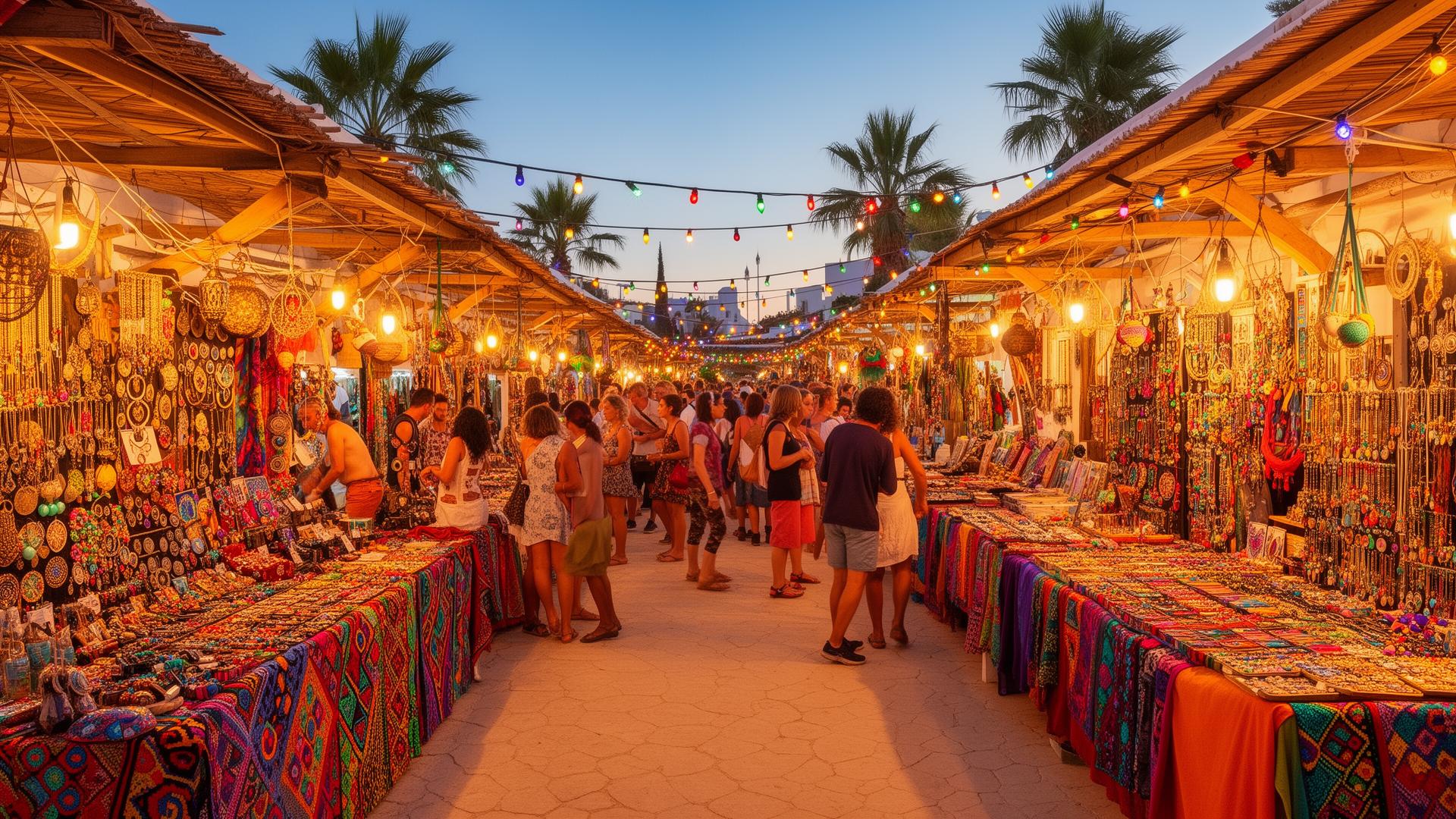
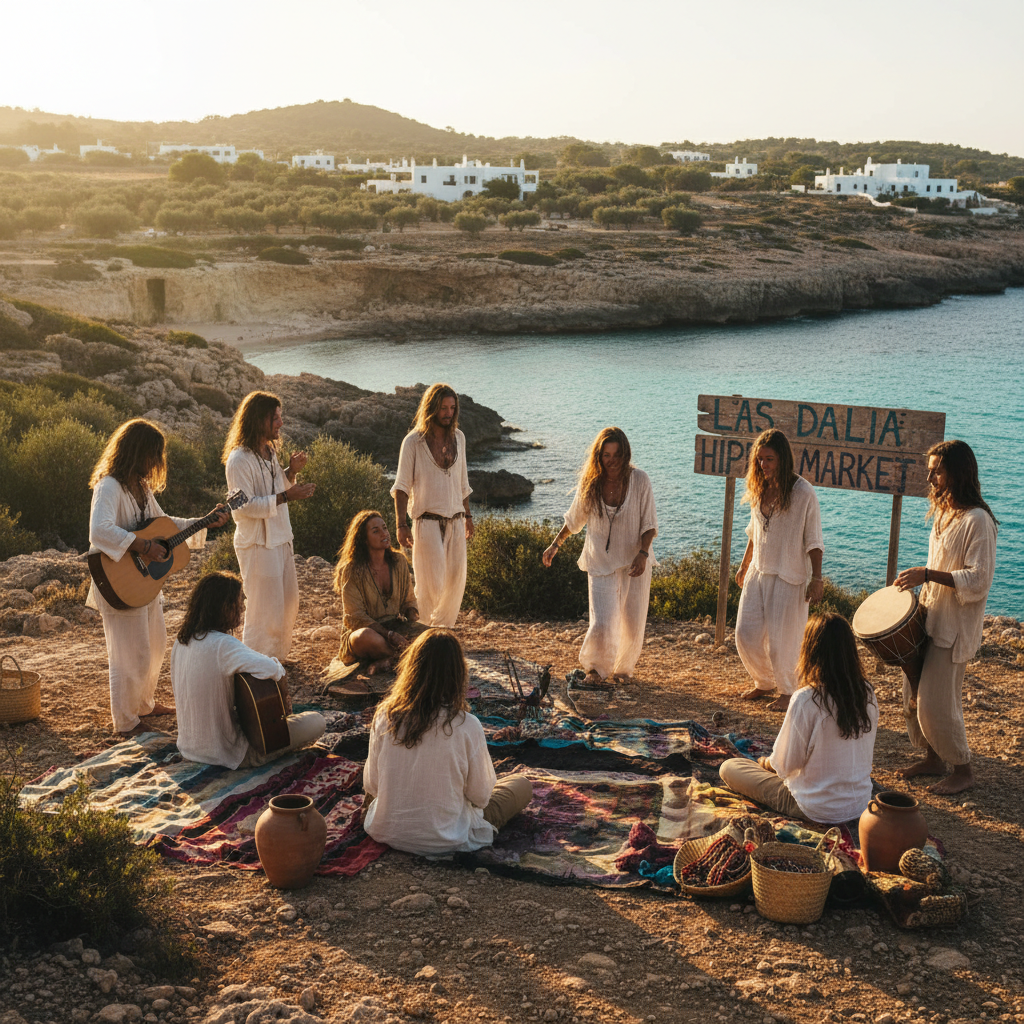
Their initial haunts were often the less developed, more secluded areas. The north, particularly around San Juan Bautista (Sant Joan de Labritja) and Sant Carles de Peralta, became popular. These villages were removed from the small but growing tourist hub around Ibiza Town. Las Dalias, then a humble roadside bar and community gathering spot in Sant Carles, became an early hotspot, hosting impromptu jam sessions and philosophical discussions. Even today, the spirit of those early gatherings lives on at the world-famous Las Dalias Hippy Market.
Setting Up Shop: Community, Creativity, and Simple Living
Life for the early hippies on Ibiza was characterized by simplicity, self-sufficiency, and a strong sense of community. Money was often scarce, so ingenuity was key. They learned to farm, to fish, and to barter. Many found ways to support themselves through crafts: making jewelry, weaving fabrics, painting, or selling small artworks on the beaches.
Their chosen dwellings were often fincas with thick stone walls that offered respite from the summer heat and winter chill. These traditional homes, often without electricity or running water, were ideal for a back-to-basics lifestyle. Communes and shared living arrangements were common, fostering a sense of collective identity. Food was often vegetarian, focused on local produce, and shared communally. The paella pan, a symbol of Spanish culinary tradition, became a vessel for shared meals and conversations that stretched late into the night.
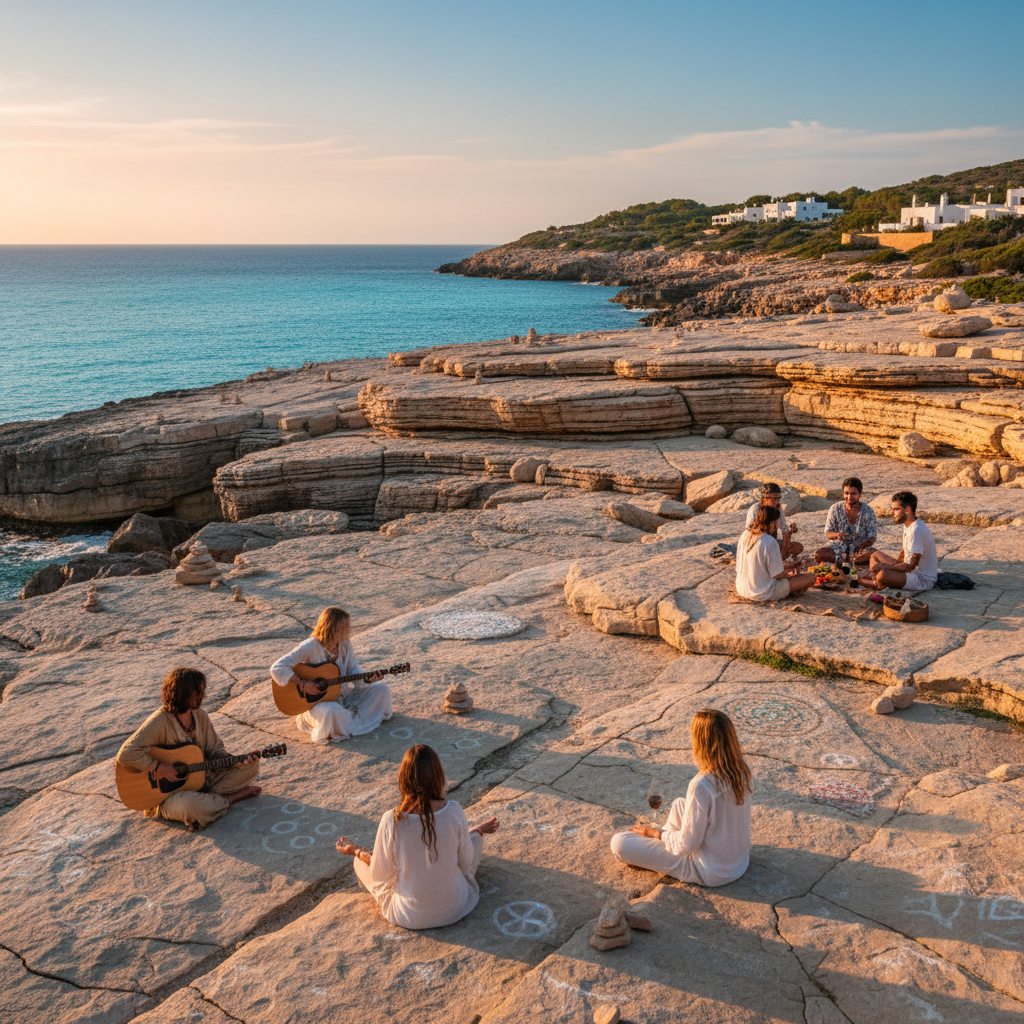
Creativity flourished. The island's natural beauty provided endless inspiration. Musicians brought their guitars, poets their notebooks, and painters their canvases. Impromptu music sessions were a common occurrence, particularly on the beaches at sunset, echoing the sounds of folk, psychedelic rock, and world music. This artistic outpouring was not about commercial success but about expression, connection, and spiritual exploration. These were not mere tourists; they were settlers, actively building an alternative way of life.
Key Hangouts and Gathering Points
While the entire island offered sanctuary, certain spots became synonymous with the hippie presence:
- Es Vedrà: This mystical rock formation off the southwestern coast became a powerful spiritual magnet. Many believed it possessed high electromagnetic energy, drawing spiritual seekers and those interested in meditation and cosmic phenomena. Gatherings to watch the sunset over Es Vedrà were, and remain, a ritual. You can experience the awe from Cala d'Hort beach.
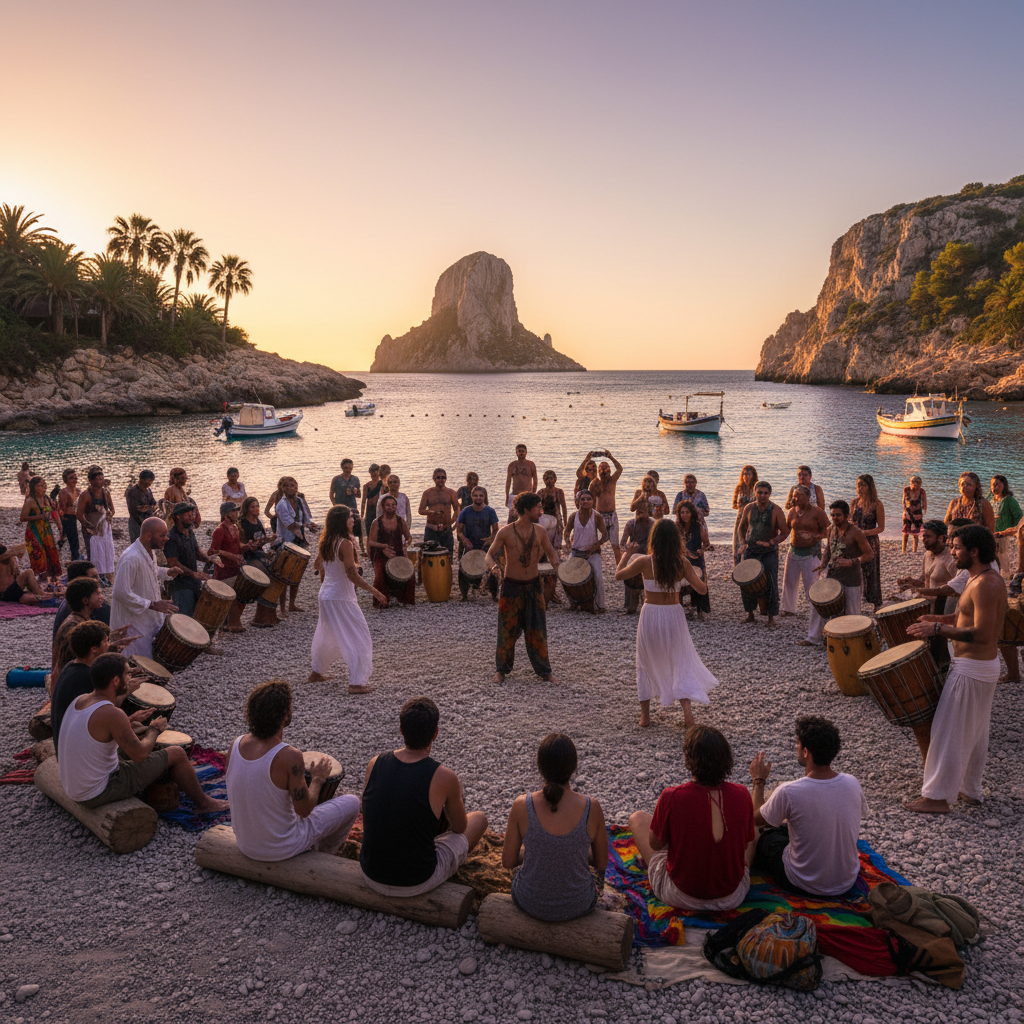
- Benirràs Beach: By the late 1960s and early 70s, Benirràs, nestled in a sheltered bay in the north, became the gathering spot, especially for the famous "Drumming Circle" on Sundays. A tradition that continues to this day, the drumming circle at Benirràs, particularly lively in August, is a direct legacy of those early hippie encampments. It's a truly visceral experience, best visited in the late afternoon to catch the sunset rhythms.
- Sant Carles de Peralta: The village itself, and especially Bar Anita (Can Anneta), became a de facto post office and meeting point. This traditional bar with its vine-covered terrace was where hippies posted letters, exchanged messages on bulletin boards, and simply caught up. It still serves excellent hierbas ibicencas (Ibiza's traditional herbal liqueur). The nearby Las Dalias became legendary for its market and live music.
- Cala Salada / Cala Saladeta: These beautiful twin coves near San Antonio offered a serene escape for swimming, sunbathing, and quiet reflection, away from the developing tourist areas.
- The Hippy Markets: While Las Dalias is the most famous, other markets sprung up, like the original fledgling market at Punta Arabí near Es Canar. These markets served not just as places to sell goods but as crucial social hubs, showcasing the craft skills and artistic output of the hippie community. Discover the best markets in our guide to Shopping for Souvenirs in Ibiza.
The Influx of the 'Jet Set Hippies' and the Island's Transformation
As word of Ibiza's bohemian paradise spread, its demographics began to shift, leading to both a cultural reinforcement and, eventually, a commercialization that would alter its trajectory. By the late 1960s and early 1970s, the island began to attract a more affluent, celebrity-driven "jet set hippie" crowd. People like Pink Floyd, Joni Mitchell, Bob Marley, and Cat Stevens were rumored to have visited or lived on the island for periods. This brought an undeniable glamour and international attention.
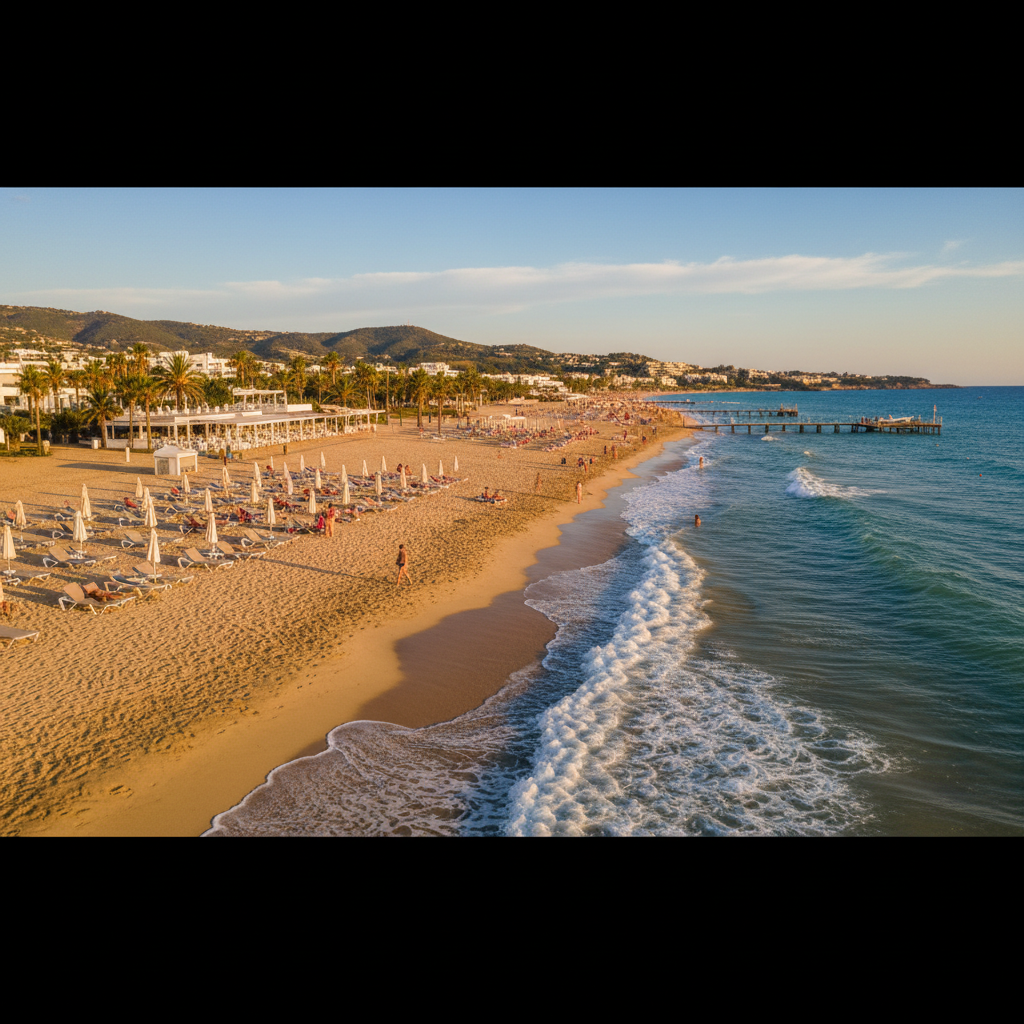
This period was also marked by a broader European package tourism boom. Cheap flights and organized tours began bringing a different kind of visitor. While the initial wave of hippies sought to escape commercialism, their presence ironically laid the groundwork for a new form of tourism. Local Ibicenco families, recognizing the potential, started converting fincas into basic guesthouses, and simple beach chiringuitos (beach bars) offered refreshments.
The 1970s saw the emergence of the first discotheques, initially small, intimate affairs far removed from the mega-clubs of today. Iconic venues like Pacha, which opened in 1973 in its present location on Avenida 8 de Agosto, and Amnesia, which started as a country house hosting open-air parties, were initially more aligned with the free-spirited, musically eclectic vibe of the era. These places, born from the same desire for communal celebration, offered a nocturnal extension of the daytime's bohemian energy. For a deeper dive into the island's legendary nightlife, check out our Guide to Ibiza's Clubbing Scene.
The Decline of Pure Hippiedom (and Its Enduring Legacy)
By the late 1970s and early 1980s, the "pure" hippie era on Ibiza began to wane. Several factors contributed:
- Commercialization: The island's growing popularity meant rising prices, increased development, and a gradual erosion of its secluded, untouched charm. The sheer number of visitors started to overwhelm the original sense of intimate community.
- Changing Global Trends: The broader counter-culture movement evolved. While the ideals remained, the raw, formative energy of the 60s and early 70s transformed into new subcultures like punk and disco, each with their own aesthetics and destinations.
- Drug Culture: While mind-altering substances were part of the hippie experience from the offset, a darker side emerged as the island became a transit point for drug trafficking. This attracted less desirable elements and prompted a stricter, albeit sometimes misguided, crackdown by authorities.
Despite these shifts, the impact of the hippies on Ibiza is profound and indelible. They didn't just visit; they integrated, contributing to the island's unique cultural tapestry. Their values of freedom, tolerance, creativity, and connection to nature became woven into the very fabric of the island’s identity.
Today, their legacy is visible everywhere:
- The Markets: Las Dalias and Punta Arabí thrive, albeit in a more organized, commercialized form, continuing to offer artisan crafts, global cuisine, and live music.
- Bohemian Style: The "Adlib fashion" – a flowing, natural, white, and often embroidered style – is a direct descendant of the hippie aesthetic, and remains a distinct part of Ibiza's style.
- Wellness and Spiritualism: The island continues to attract seekers of alternative therapies, yoga retreats, and spiritual journeys. The tranquil settings of the north and west, particularly around Santa Gertrudis and San José, host numerous such centers. Explore these offerings in our Wellness & Yoga in Ibiza hub.
- Music and Nightlife: While evolving dramatically, the spirit of communal dance and musical exploration at the heart of Ibiza's club scene began with those early gatherings. The island’s willingness to embrace new sounds and experiences can be traced back to its early counter-cultural openness.
- Eco-Consciousness: While modern tourism presents environmental challenges, a strong undercurrent of respect for the land and sea, championed by early settlers, still permeates many local initiatives.
The hippies didn't just find Ibiza; they imprinted their ethos upon it, helping to cultivate a destination where radical self-expression, artistic freedom, and a deep appreciation for natural beauty could flourish year after year. The island’s magic wasn't created by them, but it was certainly amplified and revealed to the world by their audacious quest for a different way of life. When you visit Cala Vadella or stroll through the charming streets of Dalt Vila, remember that the White Isle's unique spirit owes a profound debt to those dreamers who arrived decades ago, seeking paradise and, in doing so, helped create the enduring myth of Ibiza.