Caves of Ibiza: Cova Santa, Can Marçà and More
Everything you need to know about caves of ibiza: cova santa, can marçà and more in Ibiza — practical info, local tips and where to go next.
Beyond the Beaches: Unearthing Ibiza's Subterranean Wonders
Ibiza is a kaleidoscope of sun-drenched beaches, pulsating nightlife, and bohemian markets. But venture slightly inland, or along its dramatic coastline, and you’ll discover a hidden layer – a geological tapestry woven over millennia, revealed in breathtaking caves and ancient grottoes. These subterranean worlds offer a profound counterpoint to the island’s vibrant surface, a chance to step into geological time and experience a different kind of Ibizan magic. Forget the generic tourist traps; these are places where nature’s artistry and human history intertwine. We're going far beyond a quick peek; we're diving deep into the fascinating world beneath your feet.
Cova Santa: The Sacred Grotto with a Star-Studded Story
Perched majestically on a hillside just off the San José road, approximately 15 km from Ibiza Town and 6 km from San Antonio, Cova Santa is perhaps the most iconic and historically significant cave system on the island. Its name, "Sacred Cave," hints at its ancient reverence. Discovered by fishermen and later explored more thoroughly in the mid-20th century, this natural karst cave plunges more than 25 meters deep, adorned with spectacular stalactites and stalagmites sculpted over hundreds of thousands of years. The sheer scale and intricate formations are genuinely awe-inspiring.
Historically, Cova Santa was a natural shelter and a site of spiritual significance for the early inhabitants of Ibiza – perhaps even dating back to the Bronze Age. Imagine ancient rituals unfolding within these shadowed chambers, the drips of water echoing like unseen percussion. In the 1950s, the cave was transformed into a tourist attraction, with pathways and lighting installed to allow visitors to appreciate its geological grandeur.
However, Cova Santa’s narrative took a dramatic turn in recent decades. In the late 20th and early 21st centuries, it began to host exclusive events, blurring the lines between geological wonder and high-end entertainment. From cabaret dinner shows to open-air club nights featuring world-renowned DJs like Sven Väth and Marco Carola, Cova Santa became synonymous with a unique, nocturnal Ibizan experience. Picture a VIP crowd, sipping cocktails under the stars, with the ancient cave mouth as a surreal backdrop, the music reverberating off its timeless walls. This fusion of ancient nature and contemporary glamour is what makes Cova Santa truly unique.
For 2025/2026, Cova Santa is projected to continue its trajectory as a premier event venue, with a focus on sophisticated dinner shows and concept parties rather than weekly club nights, although one-off massive events are definitely still on the cards. Expect ticket prices for dinner experiences to start around €150-€200 per person, while special event nights could see entry fees ranging from €60-€100, depending on the artist and exclusivity. Always check their official website for the most up-to-date schedule and pricing, typically announced from March onwards for the summer season (June-September). Getting there is easiest by taxi or a pre-arranged transfer from your accommodation in nearby areas like Cala Vadella or Es Cubells. While the cave itself is not solely a tourist attraction anymore in the traditional sense, experiencing an event there offers unparalleled access to its atmosphere.
Can Marçà: The Smuggler's Lair of the North
Journey north, past the pine-clad hills and dramatic cliffs of Port de Sant Miquel, and you'll find Can Marçà, a cave that feels straight out of an adventure novel. Located about 20 km from Ibiza Town and occupying a privileged spot within a natural cliff face overlooking the turquoise waters, Can Marçà is arguably the most commercially accessible and popular cave attraction on the island.
What sets Can Marçà apart, beyond its sheer natural beauty, is its intriguing past. For centuries, this elaborate network of chambers and passages served as a secret hideout for smugglers. They used it to store contraband – tobacco, alcohol, and other illicit goods – brought in from the sea under the cover of darkness. Imagine the faint glimmer of lanterns, hushed voices, and the salty air carrying whispers of daring exploits. Guides on the 35-40 minute tour often recount these captivating tales, pointing out the original entrance used by the smugglers, perilously perched high on the cliff face, accessible only by rope.
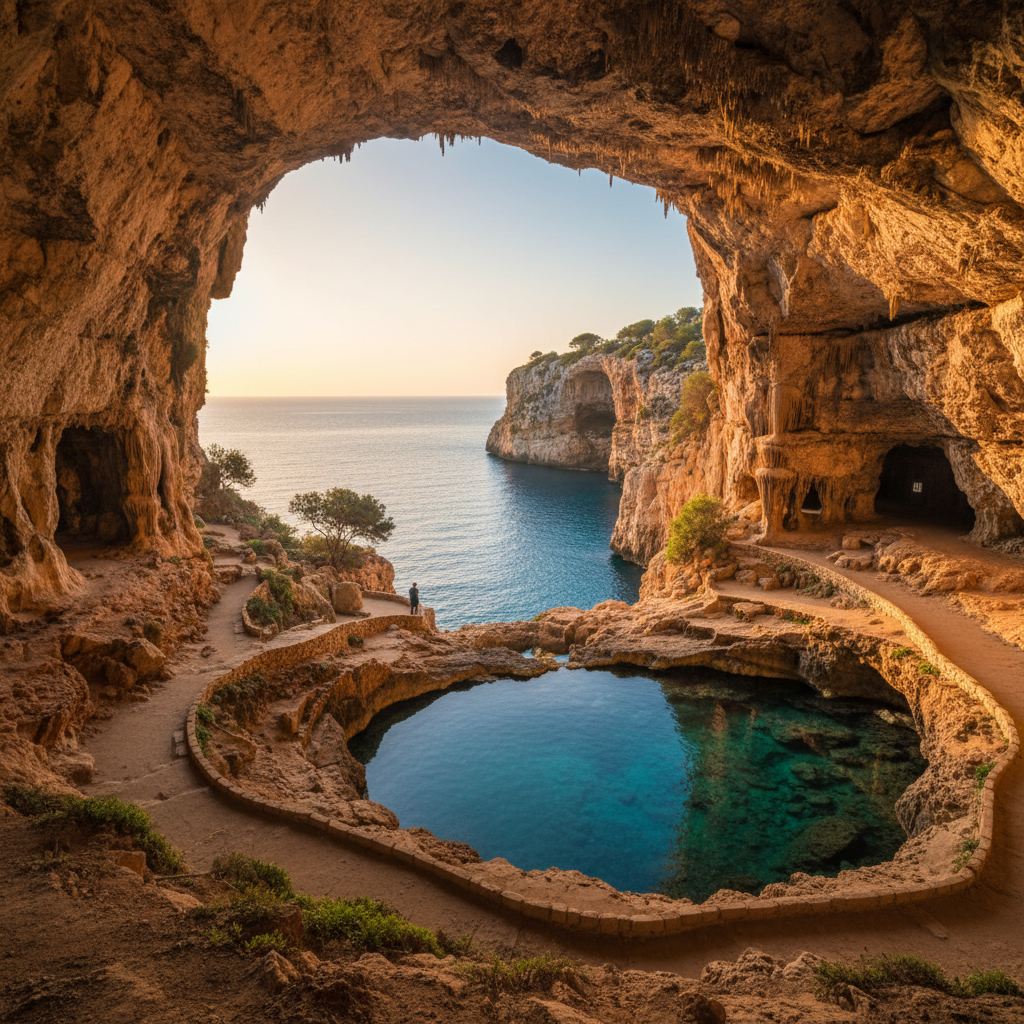
The interior of Can Marçà is a spectacular display of geological formations. Stalactites and stalagmites abound, illuminated with thoughtful, colourful lighting that enhances their natural shapes, creating an ethereal atmosphere. There’s an impressive artificial waterfall and a small lake within the cave, a feature added for dramatic effect, but it perfectly complements the natural acoustics and coolness of the subterranean environment. The temperature inside remains a constant and pleasant 18-20°C year-round, offering a welcome respite from the summer heat.
Accessed via a picturesque, winding path carved into the cliff face, offering breathtaking views of the bay of Port de Sant Miquel and even distant Portinatx, the journey to the cave entrance is part of the experience. The path itself is about a 10-minute walk from the ticket office and carpark.
Can Marçà is typically open from May to October, with varied hours in shoulder seasons. In peak summer (July-August), hours are usually 10:30 AM to 8:00 PM. Expect tour departures every 30-45 minutes. Ticket prices for 2025/2026 are likely to be around €11-€13 for adults and €7-€9 for children. It's a fantastic family-friendly excursion and a must-do for anyone staying in the north of the island or exploring its quieter side. Combine it with a lunch at one of the excellent seafood restaurants in Port de Sant Miquel, like Port Balansat, for a perfect day out. For more ideas on what to do in the north, check out our guide to /villages-towns/portinatx.
Unearthing the Untamed: Sea Caves and Hidden Grottoes
While Cova Santa and Can Marçà are the most famous, Ibiza's coastline is riddled with countless smaller, often inaccessible, sea caves and grottoes carved by millennia of wave action. These are not tourist attractions with paved paths and guided tours; they are wild, untamed spaces requiring a different approach.
One of the most renowned and visually stunning is the Cueva de la Luz (Cave of Light) near Cala Llonga. Accessible primarily by boat or kayak, this sea cave is famous for the incredible phenomenon of light that occurs when the sun's rays penetrate a fissure in the rock, illuminating the crystal-clear water with an otherworldly glow. While not always safe to enter depending on sea conditions, kayaking tours often pass by, and some adventurous boat trips might attempt a brief, careful exploration from the water. Always prioritize safety and local knowledge if attempting to approach by kayak; sea conditions can change rapidly.
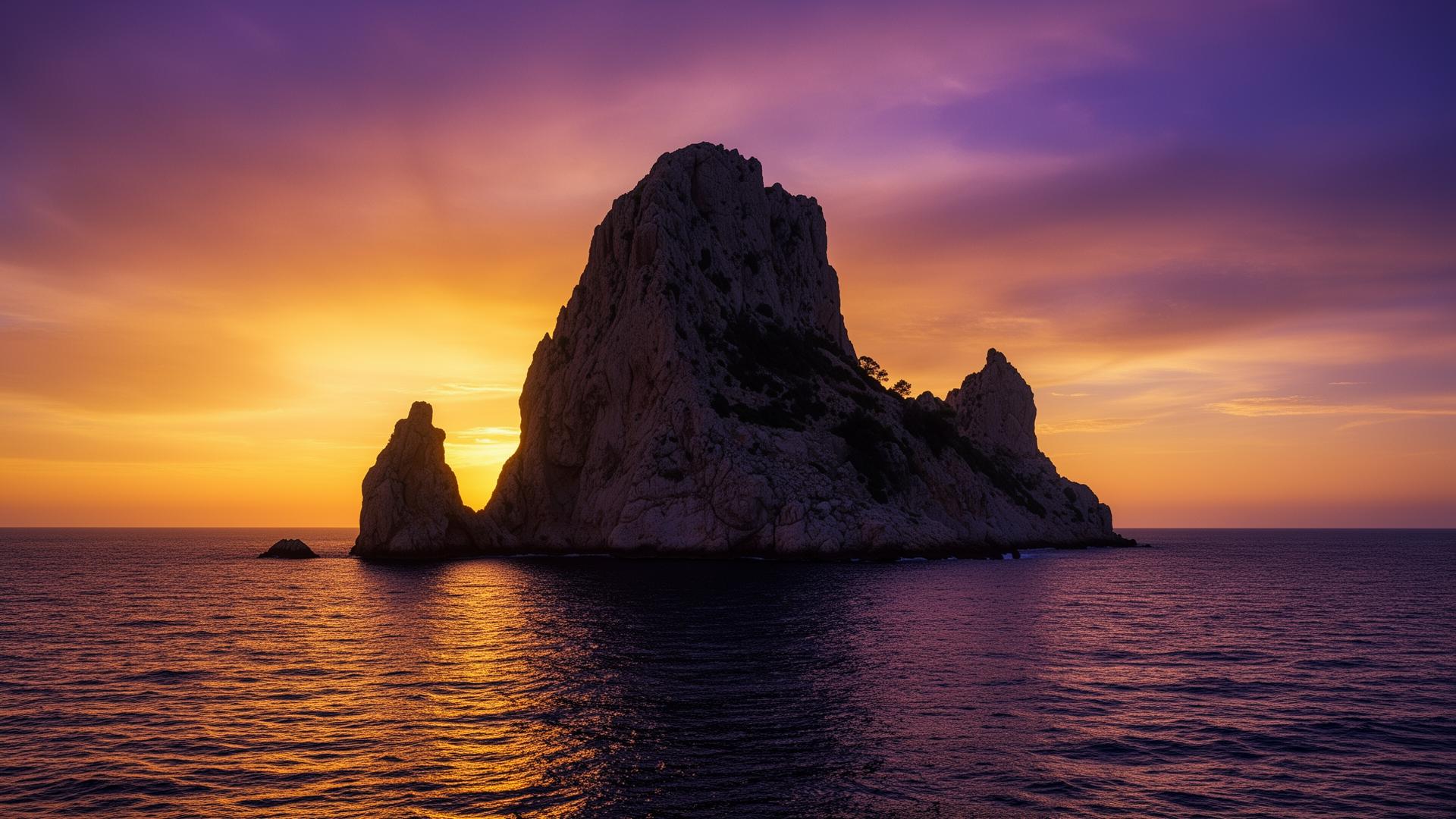
Another intriguing spot is the small, almost hidden Cueva de Es Vedrà, located on the mainland directly opposite the mystical rock monolith of Es Vedrà. This isn't a massive cave system, but rather a series of natural shelters and overhangs that offer unparalleled views of the legendary islet. It’s a popular spot for reflective moments and photography, particularly at sunset. Access involves a short, somewhat rugged walk from the nearest parking area, requiring sturdy shoes. While not a true "cave" in the traditional sense, its raw, primal feel connects it to the island's ancient geological narrative. For more on the magic of Es Vedrà, explore our article on /culture-history/es-vedra-mystery.
For the truly adventurous, particularly those experienced in coasteering or deep-water soloing, numerous unnamed grottoes dot the rugged coastline between Cala Tarida and Cala Vedella, or along the eastern shore near Figueral. These hidden gems often reveal themselves only at low tide or require a keen eye from a small boat. Without local expertise, these are best admired from a distance or with a qualified guide. Never attempt to enter sea caves without understanding the tides, currents, and potential for rock falls.
The Myth and Magic: Caves in Local Folklore
Ibiza's caves, both grand and minute, have always been fertile ground for local legends and folklore. Far from being mere geological formations, they are seen as living entities, often imbued with spiritual significance or as sites of mythological encounters.
Cova Santa, as its name suggests, was once believed to be a sacred sanctuary, possibly housing ancient deities or serving as a portal to other realms. Local tales speak of mysterious lights and unexplained phenomena within its depths, tales kept alive through generations. Its transformation into a modern-day temple of electronic music only adds another layer to its enigmatic charm – a sacred space redefined by contemporary ritual.
Es Vedrà itself, with its unparalleled magnetic properties, is flanked by numerous small underwater caves and terrestrial grottoes that are central to many Ibizan myths. Stories abound of UFO sightings, mermaids, and even benevolent spirits residing in these shadowed coastal havens. The "Grotto of Tanit," often associated with a small cave near Cala Benirrás (though its exact location is fiercely guarded by locals or debated), refers to the Phoenician goddess of fertility and war, a powerful deity worshipped by Ibiza's earliest known inhabitants. While no archaeological proof definitively links a specific cave to Tanit worship, the very idea of a sacred grotto dedicated to such a potent goddess highlights the profound connection ancient Ibizans felt with these natural features. These stories aren't just quaint tales; they are glimpses into the island's deep-rooted spiritual identity.
Practicalities: Exploring Ibiza's Subterranean World
Exploring Ibiza's caves, from the commercially developed to the wild and inaccessible, requires a balanced approach of planning and respect for nature.
Getting There:
- Car Hire: For destinations like Cova Santa and Can Marçà, a rental car is highly recommended. It offers the flexibility to combine your cave visit with exploring nearby beaches or villages. Traffic can be busy in peak season (July-August) on the main roads, but rural roads to the caves are generally manageable. Parking is usually available at both main sites. For tips on navigating the island, see our /transport hub.
- Taxis/Transfers: Taxis are readily available from all major towns and resorts, but can be costly. Pre-booked transfers are a good option for groups or for Cova Santa events.
- Public Transport: Can Marçà is serviced by bus route 23 (Ibiza Town – Santa Eulalia – San Juan – Port de Sant Miquel), but frequency can be limited, especially outside peak season. Cova Santa is not directly served by public transport.
- Boat/Kayak Tours: For sea caves like Cueva de la Luz, joining a guided boat trip or kayaking excursion is the safest and most enjoyable option. Several operators depart from places like Santa Eulalia, San Antonio, and Cala Llonga. Expect prices for a half-day kayak tour (including equipment and guide) to range from €50-€80 per person in 2025/2026.
What to Wear & Bring:
- Sturdy Footwear: Even for paved paths, good walking shoes are a must through caves. If exploring wilder areas, proper hiking boots are essential.
- Light Jacket/Layers: Caves maintain a constant, cooler temperature. Bring a light jacket or cardigan, even on a scorching summer day.
- Water: Stay hydrated, especially if you're walking to the caves in the sun.
- Camera: The formations and views are incredibly photogenic, but remember the low light conditions inside.
- Swimwear/Towel: If you’re near the coast and plan to combine your cave visit with a dip in the sea.
Safety Considerations:
- Guided Tours: For Cova Santa (during events) and Can Marçà, you'll be with a guide or in a controlled environment. Pay attention to safety briefings.
- Wild Caves: Do NOT attempt to explore wild or unmapped caves without experienced guides, proper equipment (helmets, headlamps, rope), and a thorough understanding of caving risks. Tides and sea conditions are particularly dangerous in coastal grottoes. Rockfalls are also a risk. This article is not an endorsement for unsupervised entry into dangerous caves.
- Respect the Environment: Do not touch formations in caves, as oils from your skin can damage them. Do not litter. These are ancient, fragile ecosystems.
Beyond the Obvious: Cave Dining & Wellness
The unique atmospheric conditions of Ibiza's caves have not gone unnoticed by the island's innovators. While Cova Santa is the prime example of a cave integrated with high-end dining and entertainment, smaller, more intimate grottoes have also occasionally been utilized for unique culinary experiences. Imagine a bespoke private dinner, tailored for a special occasion, held in a secluded coastal grotto at sunset, candles flickering, and the sound of waves providing a natural soundtrack. Such exclusive experiences are typically arranged through luxury concierge services or high-end hotels.
Beyond dining, there’s a growing trend towards connecting with nature’s raw power. While not specifically advertised as "cave wellness," the primal, grounding energy found within these ancient spaces naturally lends itself to meditation or introspective moments. Some yoga retreats on the island, particularly those focused on connecting with nature, might incorporate visits to specific, safe grottoes for private meditation or ritual, offering a profound sense of connection to the Earth's ancient heart. This is about seeking out unique, often unadvertised opportunities to tap into the island's raw energy.
A Glimpse into Ibiza's Timeless Core
Ibiza’s caves offer a profound journey into the island’s geological past and an unexpected counterpoint to its vibrant surface energy. From the dramatic stalactites of Can Marçà, echoing with smuggler’s tales, to the ancient sanctity and modern glamour of Cova Santa, these subterranean worlds whisper stories of millennia. They invite you to slow down, to feel the cool air against your skin, and to witness nature’s slow, deliberate artistry. So next time you're on the White Isle, dare to delve beneath the surface – you'll discover a side of Ibiza that is as ancient as it is awe-inspiring, a truly timeless experience.