Why Dalt Vila Is a UNESCO World Heritage Site
Everything you need to know about why dalt vila is a unesco world heritage site in Ibiza — practical info, local tips and where to go next.
The Citadel's Uncommon Resilience: A UNESCO Distinction Beyond Aesthetics
When the United Nations Educational, Scientific and Cultural Organization (UNESCO) bestows World Heritage status, it’s not merely a pat on the back for picturesque beauty. It’s an acknowledgment of “outstanding universal value” – something globally significant and irreplaceable. For Ibiza’s Dalt Vila, the fortified upper town, this elite designation, granted in 1999, goes far deeper than its stunning panoramic views or well-preserved golden walls. It’s a testament to its unparalleled continuous strategic importance and the remarkable architectural evolution it showcases, a living archive of Mediterranean military engineering and intercultural exchange spanning millennia. Forget the notion that Dalt Vila is just another pretty old town; its UNESCO recognition lies in its extraordinary, uninterrupted narrative as a sentinel guarding a vital crossroads of maritime trade.
A Phoenician Foothold: The Genesis of Strategic Dominance
Long before its current incarnation as a UNESCO site, the very bedrock of Dalt Vila was recognized for its strategic potential. Around 654 BC, Phoenician settlers, seasoned mariners and traders, established a crucial port at what is now Ibiza Town. They chose this particular promontory not for its abundant freshwater or fertile land, but for its commanding position overlooking the natural port, providing natural defense against invaders and unparalleled visibility across the Mediterranean. While the visible walls of Dalt Vila are largely Renaissance, the precedent for its strategic importance was laid by these early colonizers. Their Punic necropolis at Puig des Molins, just a short walk below Dalt Vila’s walls – also part of the UNESCO designation – provides tangible evidence of their enduring presence and sophisticated societal structure. These early inhabitants didn't build monumental fortifications in the later style, but they certainly understood the inherent defensive advantages of the site, setting the stage for future empires to enhance and elaborate upon this natural fortress.
Roman, Vandal, Byzantine, Arab: Layers of Defense and Culture
Dalt Vila’s UNESCO status importantly recognizes its diachronic character, meaning its ability to tell a continuous story through successive historical layers. Following the Phoenicians, the Romans arrived, further solidifying the strategic importance of Eivissa (as they called it). Though less visually prominent than later contributions, Roman influence undoubtedly contributed to the embryonic urban plan and defensive structures. Next came the Vandals, then the Byzantines, each leaving their indelible, if subtle, marks.
However, it was the arrival of the Arabs in the 8th century that truly began to reshape Dalt Vila into a formidable stronghold. They named the island Yebisah and substantially refortified the existing structures. The current layout of the streets within Dalt Vila, particularly the labyrinthine design intended to confuse attackers, owes much to Arab urban planning. While many of their specific defensive structures were later overwritten, their street plan and the very essence of a fortified medina remain palpably present. Walk the narrow alleys, particularly around the Cathedral Square, and imagine the whispers of Arabic spoken over a thousand years ago. The resilience of this urban fabric, adapting and incorporating rather than erasing, is a key component of its UNESCO value.
The Catalan Conquest and the Rise of a Gothic Stronghold
The Christian Reconquest of Ibiza in 1235 by Catalan forces, primarily led by Guillem de Montgrí, marked another pivotal moment in Dalt Vila’s defensive evolution. The existing Arab fortifications were deemed insufficient for the new era of warfare, and the Catalans began a process of reinforcing and reconstructing. This period saw the construction of significant Gothic elements, particularly within the Cathedral itself, which was originally a mosque built upon an earlier Visigothic edifice.
The Cathedral of Our Lady of the Snows (Catedral de Santa Maria de les Neus) stands as a superb example of this layering, showcasing a blend of Gothic and Baroque styles. Its sturdy walls and strategic location at the highest point of Dalt Vila underscore its dual role as a spiritual center and a crucial defensive observation post. The construction of the Portal de ses Taules, though mostly Renaissance, replaced an earlier medieval gate, and the very concept of a single, impregnable entrance was refined during this period. The UNESCO designation highlights how these medieval interventions laid strong foundations for the later, more spectacular Renaissance fortifications.
The Renaissance Reinvention: An Exemplar of Military Architecture
This is where Dalt Vila truly shines as a UNESCO site for military architecture. By the 16th century, the rise of artillery rendered many medieval walls obsolete. The constant threat of Ottoman incursions, particularly from Turkish pirates and corsairs, necessitated a complete overhaul of Ibiza’s defenses. The Emperor Charles V commissioned the eminent Milanese military engineer Giovanni Battista Calvi to design new, state-of-the-art fortifications.
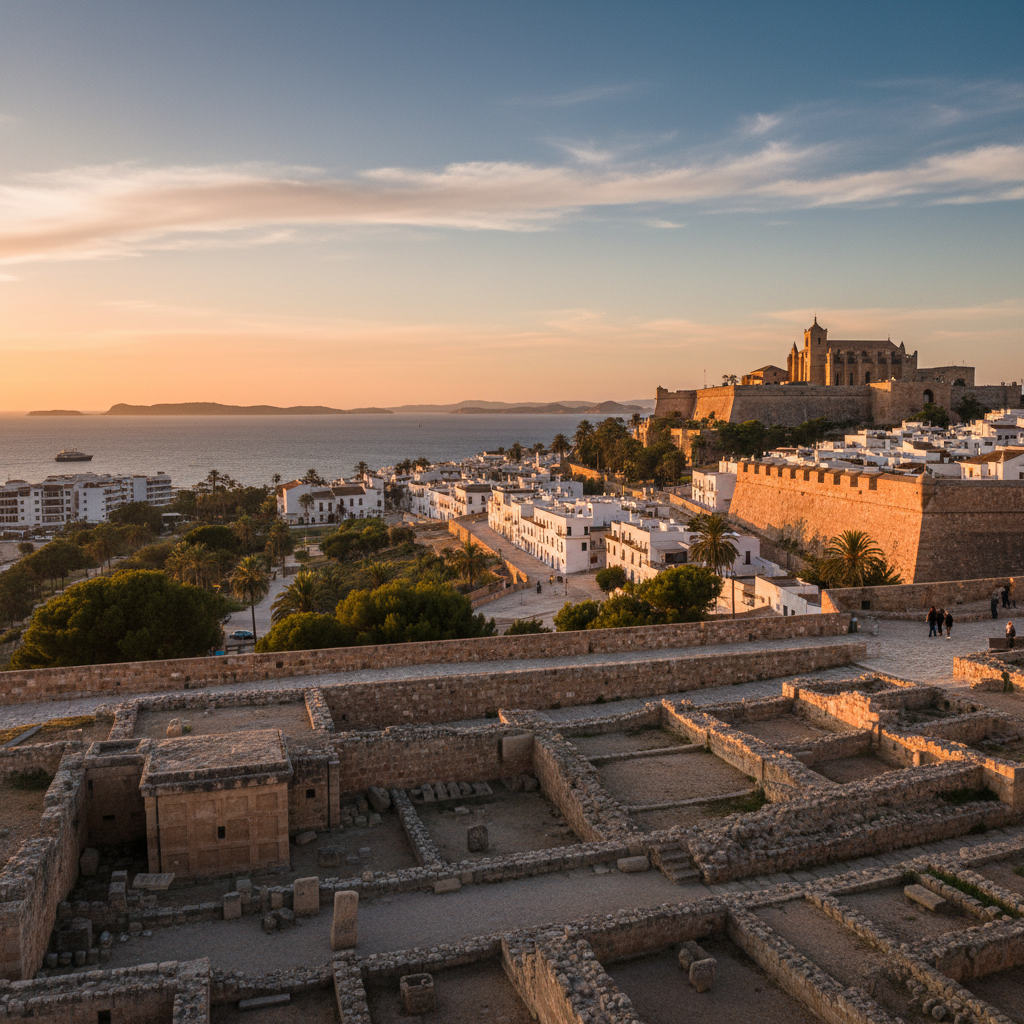
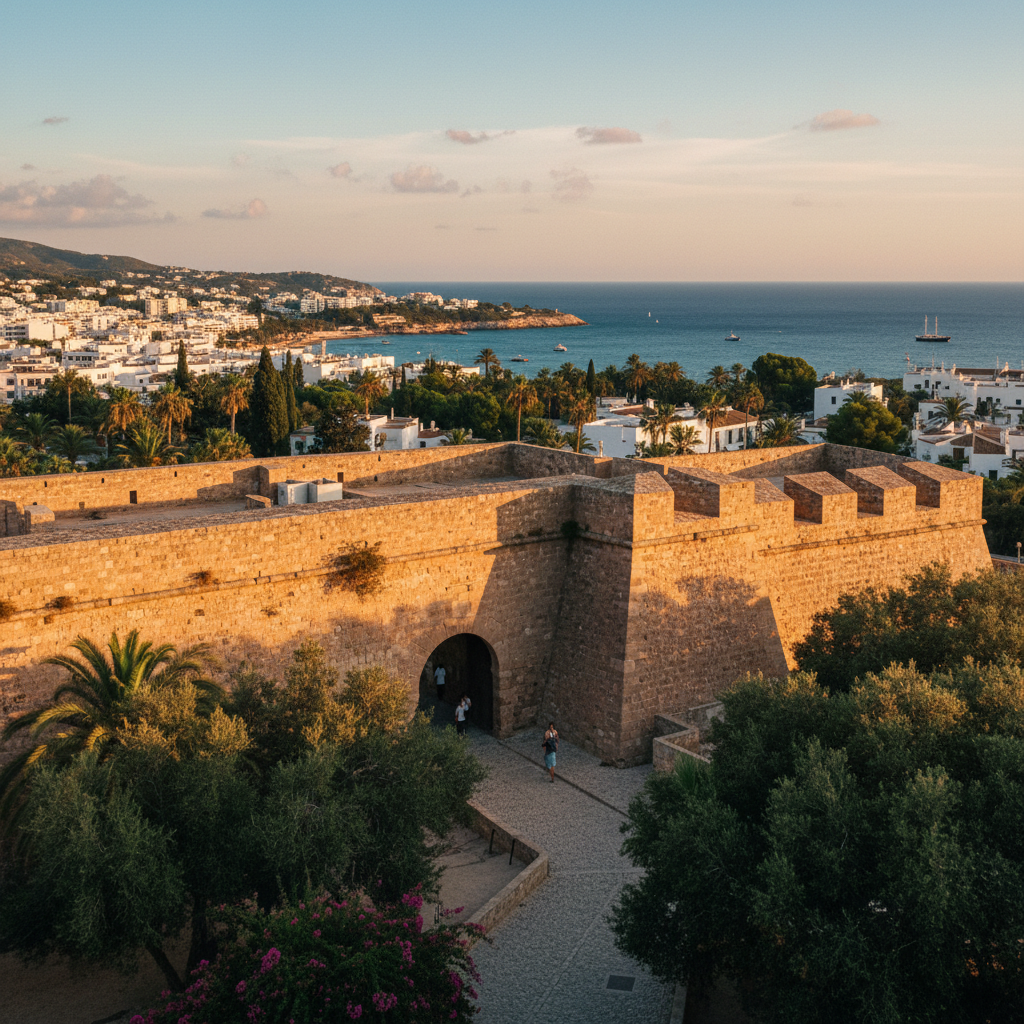
What you see today – those magnificent, towering walls with their seven formidable bastions – are predominantly Calvi’s work, a masterpiece of Renaissance military engineering. These "Italian-style" bastioned ramparts were revolutionary, designed to withstand cannon fire with their thick, sloped walls and strategic angles. Each bastion (Sant Jaume, Sant Pere, Sant Jordi, Sant Bernat, Sant Antoni, Santa Tecla, and Santa Llúcia) was a self-contained defensive unit, allowing for flanking fire and mutual support. For example, the Bastion of Sant Bernat, offering some of the most expansive views across the port and out to Formentera, clearly demonstrates the geometric brilliance of Calvi’s design.
The UNESCO designation specifically cites Dalt Vila as one of the best-preserved examples globally of this new approach to urban defense, significantly influencing subsequent fortification design across the Mediterranean and beyond. It’s not just a wall; it’s an academic lesson in strategic defense from an era of profound military technological change.
The UNESCO Criteria Met: Outstanding Universal Value
UNESCO doesn't just pick sites willy-nilly; Dalt Vila’s inscription was based on several specific criteria that articulate its "Outstanding Universal Value":
-
Criterion (ii): It exhibits an important interchange of human values, over a long period or within a cultural area of the world, in developments in architecture or technology, monumental arts, town-planning or landscape design. Dalt Vila is a prime example of the evolution of defensive architecture and urban planning in a strategic Mediterranean port. From Phoenician settlement to Renaissance bastions, it demonstrates continuous adaptation to changing warfare and societal needs. The intermingling of Arabic street patterns with later European fortifications is a clear illustration.
-
Criterion (iv): It is an outstanding example of a type of building, architectural or technological ensemble or landscape which illustrates (a) significant stage(s) in human history. The Renaissance fortifications of Dalt Vila are among the finest and most complete examples of bastioned defenses, perfectly illustrating the height of military engineering in the 16th century. They actively shaped the urban fabric and strategic thinking of the era.
-
Criterion (x): To contain the most important and significant natural habitats for in-situ conservation of biological diversity, including those containing threatened species of outstanding universal value from the point of view of science or conservation. This criterion might seem less obvious for a fortified town, but it refers to the Posidonia oceanica Seagrass Meadows in the surrounding marine environment. These ancient underwater meadows are critical to the biodiversity of the Mediterranean Sea, acting as the "lungs" of the ecosystem and providing habitat for countless species. They also play a crucial role in maintaining water clarity and preventing coastal erosion. This botanical wonder underpins the exceptional ecological value of the wider Ibiza and Formentera marine park, enriching the overall UNESCO designation far beyond Dalt Vila’s walls. For those interested in the natural heritage, a snorkel or dive tour originating from the main port can bring you face-to-face with these remarkable underwater forests. Check out /hubs/watersports for more on marine activities.
More Than Walls: The Urban Fabric and Daily Life
Beyond the monumental fortifications, the UNESCO designation also celebrates the preserved urban fabric within Dalt Vila. Unlike many fortified towns that were either destroyed, dramatically altered, or depopulated, Dalt Vila retains a vibrant, living community. Its cobbled streets, historic buildings, and public spaces like the Plaça de la Vila continue to host residents, businesses, and cultural events.
Take a stroll up Carrer Major towards the Cathedral; you’ll pass charming boutiques stocking traditional Ibizan goods, art galleries showcasing local talent, and small, family-run restaurants like La Mezcalería or El Olivo, offering intimate dining experiences within centuries-old settings. The enduring residential component ensures Dalt Vila is not a sterile museum but a dynamic, albeit ancient, part of modern Ibiza. This palpable sense of continuous habitation, adapting yet preserving its unique character, is a subtle but vital aspect of its universal value.
The Portal de ses Taules: A Grand Entrance to History
The main entrance to Dalt Vila, the Portal de ses Taules, is itself a UNESCO-recognized marvel. This majestic gate, flanked by two Roman statues (replicas, the originals are in the Museo Arqueológico), was constructed in the late 16th century, part of Calvi's master plan. Passing through its massive wooden doors and under its vaulted ceiling, you step back in time. Above the gate, the coat of arms of Philip II of Spain reminds visitors of the monarch under whose reign these magnificent defenses were completed.
This entry point isn't just functional; it's symbolic. It immediately impresses upon the visitor the impregnable nature of the citadel and marks a clear transition from the bustling modern port to the tranquil, ancient heart of the city. The Plaza de la Vila, just inside the gate, with its charming boutiques and restaurants like the iconic La Oliva, immediately invites you to linger and absorb the atmosphere, much as it must have done for merchants and dignitaries centuries ago.
Exploring the Bastions: Unfolding the Strategic Narrative
To truly appreciate Dalt Vila's UNESCO value, you must walk its ramparts. Don't just stick to the main street. Each bastion offers a unique perspective and a different point of historical interest.
-
Bastion of Sant Pere (Baluard de Sant Pere): Often one of the first bastions you encounter after entering through the Portal de ses Taules, it provides excellent views over the modern port and offers a glimpse into how the fortifications integrated with the natural topography.
-
Bastion of Sant Jaume (Baluard de Sant Jaume): Home to a small exhibition of artillery and a working medieval catapult replica, it's a fantastic spot for understanding military life within the walls. It also affords views towards the west, perfect for sunset gazing.
-
Bastion of Sant Jordi (Baluard de Sant Jordi): This bastion offers panoramic vistas over the marina and the bustling Marina Botafoch and Talamanca areas. It's a key observation point, illustrating how the entire bay was monitored for approaching ships. It’s also close to the main parking area for Dalt Vila (though parking within the old town is highly restricted, practically impossible for non-residents). Consider parking closer to the port and walking up, or using the small electric bus. Further information on local transport can be found in /hubs/transport.
-
Bastion of Sant Bernat (Baluard de Sant Bernat): As mentioned, this bastion provides stunning views extending towards Formentera and the open sea, showcasing the strategic necessity of the fortifications against maritime threats. It’s an ideal spot for photography.
Between these bastions, the ronda (rampart walk) allows you to fully grasp the scale and complexity of the defenses. You’ll notice the ingenious design – double walls in places, arrow slits (though by the Renaissance, cannon embrasures were more prevalent), and guard towers. This continuous walk around the perimeter offers an unparalleled opportunity to immerse yourself in the defensive architecture that earned Dalt Vila its inscription.
The Museum Experience: Connecting the Dots
To truly understand the "why" behind Dalt Vila's UNESCO status, a visit to the Museo Arqueológico de Ibiza y Formentera, located near the Cathedral, is indispensable. It houses artifacts spanning from the Phoenician and Punic periods right through to the Arab and medieval eras. You'll see everyday items, burial goods from Puig des Molins, and architectural fragments that help reconstruct the lives of Dalt Vila's past inhabitants. The museum effectively bridges the gap between the monumental structures outside and the human stories encapsulated within. It helps contextualize the layers of history visible in the walls and streets, making the walk around Dalt Vila a far richer experience. Don't miss the original Roman statues from the Portal de ses Taules displayed here. Opening hours typically run from 10:00 to 14:00 and 17:00 to 20:00, with slight variations by season. Expect an entrance fee of around €3-€5 (2025/2026).
A Living Legacy: Preserving for the Future
The UNESCO designation for Dalt Vila is not a static award; it comes with responsibilities. The local authorities, including the Ajuntament d'Eivissa and the Consell Insular, are committed to its preservation and sustainable management. This involves ongoing restoration work on the walls, careful regulation of new construction within the heritage zone, and sensitive urban planning to maintain the historical integrity while allowing for modern life. The challenges are numerous – balancing tourism with residential quality of life, maintaining ancient infrastructure, and protecting the fragile coastal ecosystem.
However, the global recognition ensures that these efforts are supported and that Dalt Vila, with its stunning fortifications, labyrinthine streets, and profound historical narrative, will continue to stand as a vital cultural monument for generations to come. When you visit, remember you’re not just seeing an old castle; you're walking through a meticulously preserved, living textbook of Mediterranean history, military strategy, and cultural exchange – a truly outstanding universal treasure. If you're interested in digging deeper into the island's rich past, our /hubs/culture-history hub offers further reading.