Pirates and Watchtowers: Ibiza's Defensive Past
Everything you need to know about pirates and watchtowers: ibiza's defensive past in Ibiza — practical info, local tips and where to go next.
The Spectre of the Barbary Corsairs: Why Ibiza Needed Its Walls
Long before the beats of world-renowned DJs pulsed through its superclubs, Ibiza’s shores echoed with a far different rhythm: the distant clang of a warning bell, the hurried shouts of villagers, and the ominous flapping of pirate sails on the horizon. The island, strategically positioned in the western Mediterranean, was a tempting target for centuries, primarily for the Barbary corsairs who operated from the North African coast. These weren't isolated incidents; piracy was a perennial, existential threat that shaped Ibiza's landscape, architecture, and even its deep-seated cultural memory.
Between the 14th and 18th centuries, the corsair menace was at its peak. Raids were often brutal, aimed at capturing goods, livestock, and most significantly, people, who would then be sold into slavery. Imagine waking to the horror of a pirate longboat landing on your local beach – perhaps Cala Vadella, or even the now-tranquil shores of Ses Salines – and having mere minutes to flee inland. This constant peril spurred the construction of an extensive, integrated defensive system that stands as a testament to the resilience and ingenuity of the islanders. Understanding this period isn’t just about history; it’s about grasping the very soul of Ibiza, its deep-rooted sense of community, and the layers beneath its contemporary allure. It's a key reason why Dalt Vila, the old town of Ibiza, is so magnificently fortified – not for show, but for sheer survival.
Dalt Vila: The Unconquerable Fortress
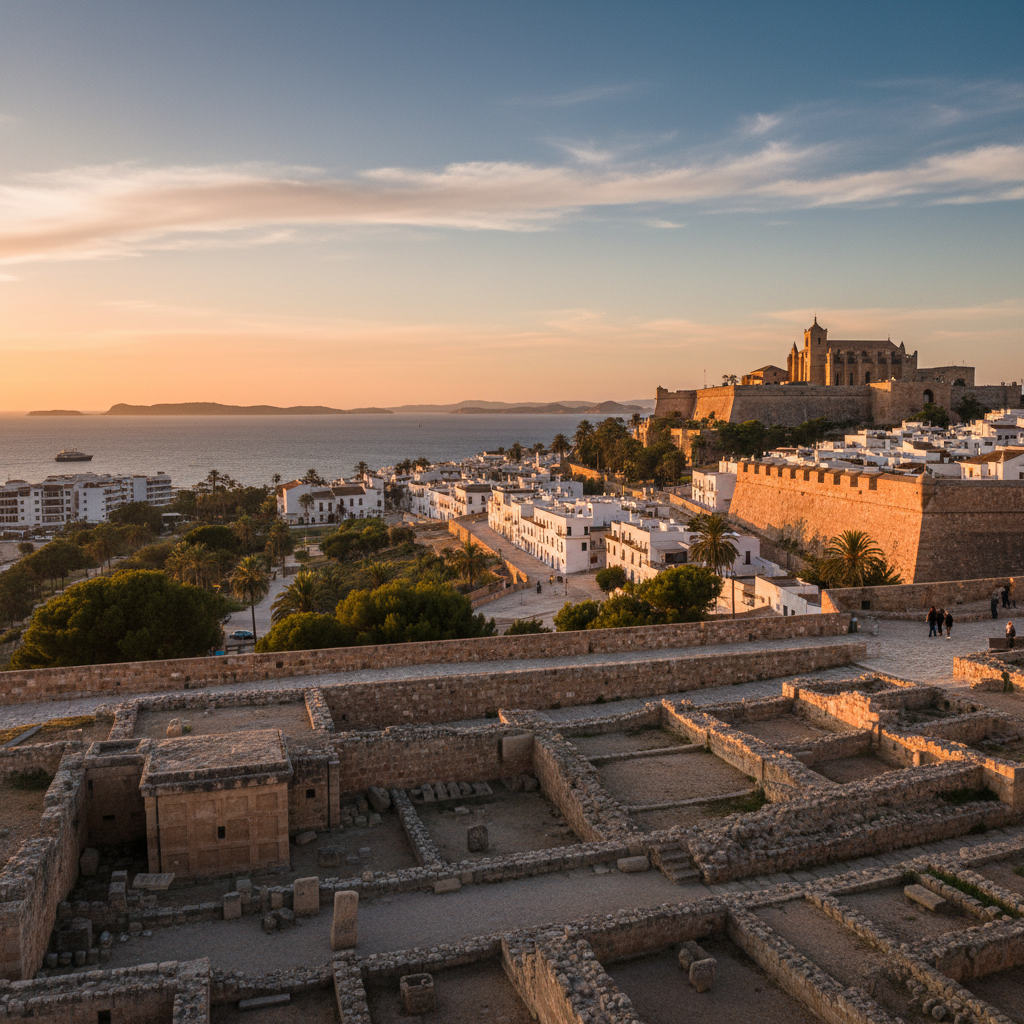
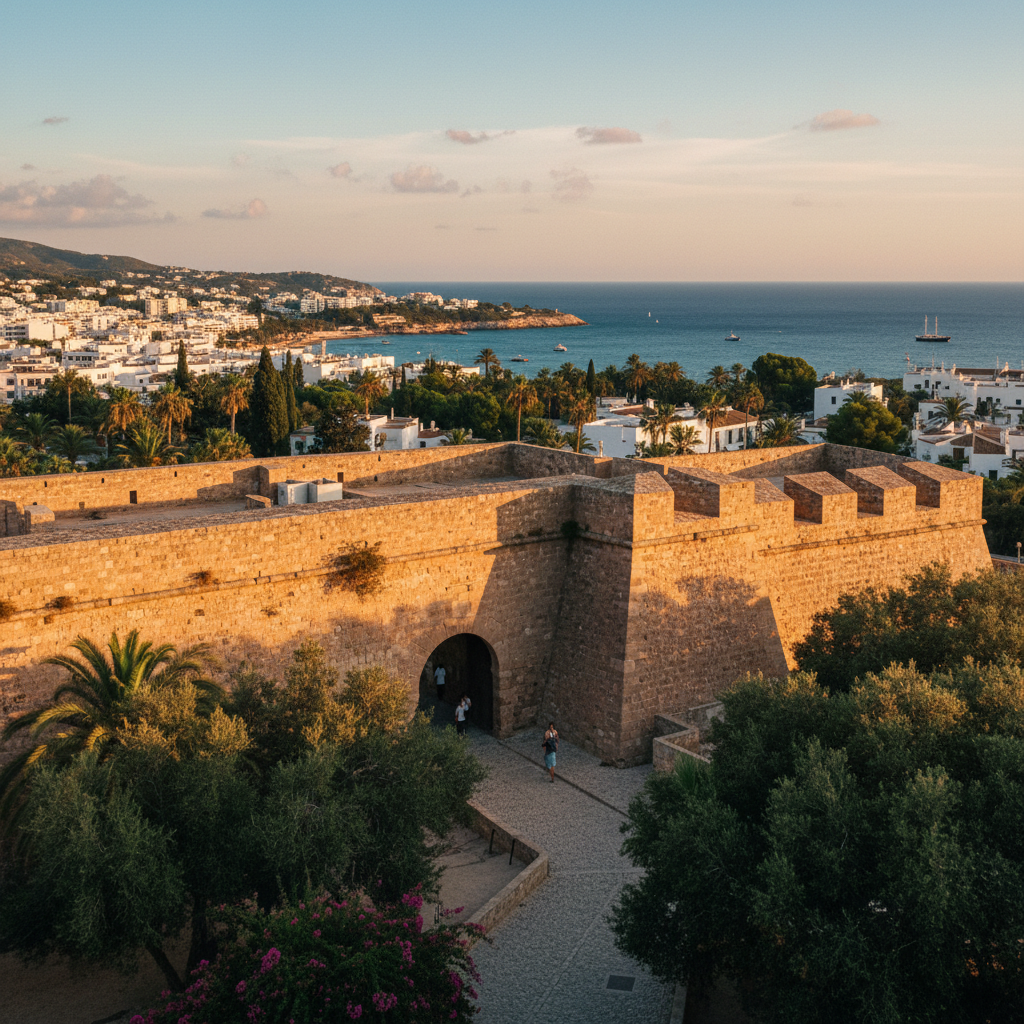
The crowning glory of Ibiza’s defensive past, and indeed its entire historical narrative, is undoubtedly Dalt Vila, the fortified upper town of Ibiza City. A UNESCO World Heritage site since 1999, these walls aren’t merely old; they are a masterpiece of Renaissance military architecture, built to withstand the most sophisticated assaults of their time. Construction as we largely see it today began in the 16th century under King Philip II, replacing earlier, less formidable defences. The urgency was plain: the island's capital needed to be impregnable.
Start your exploration at the main gate, the Portal de ses Taules, reached after passing the bustling Mercat Vell (Old Market). Notice the ramp leading up to it, flanked by massive bastions. These weren't designed for beauty but for maximum defensive capability. The seven colossal bastions – Santa Tecla, Sant Antoni, Sant Jordi, Sant Bernat, Sant Jaume, Sant Pere, and Baluard de Sant Joan – protrude outwards, allowing defenders to unleash crossfire on any approaching enemy or siege equipment. The sheer scale is breathtaking. Walk along the ramparts, perhaps as the sun begins to set, casting long shadows over the ancient stones. From Baluard de Sant Pere, you get commanding views of the port and the vibrant Marina Botafoch and Talamanca beyond. From Baluard de Sant Bernat, look south towards Formentera; it becomes immediately clear why this high vantage point was critical for early spotting of approaching vessels.
Inside the walls, the winding cobbled streets, or 'carrerons', were designed to confuse and bottleneck invaders, offering endless opportunities for ambush. Even a casual stroll reveals architectural details reflecting this defensive mindset – thick walls, small windows, and strategic placements. Allow at least 2-3 hours to properly explore Dalt Vila, including a visit to the Cathedral of Santa Maria de la Neu and the Archaeological Museum, which houses artefacts unearthed from Punic and Roman times, including those found during the construction of these very walls. Combine your historical exploration with a dinner at a restaurant like La Oliva in Plaza de la Vila for a truly atmospheric evening. For guided tours, local companies like Ibiza Cultours offer excellent insights, often operating evening tours during the summer months (May-October) for around €25-€35 per person. For a deeper dive into the city's overall history, consider our article on [/hubs/villages-towns].
The Watchtower Network: Eyes on the Horizon
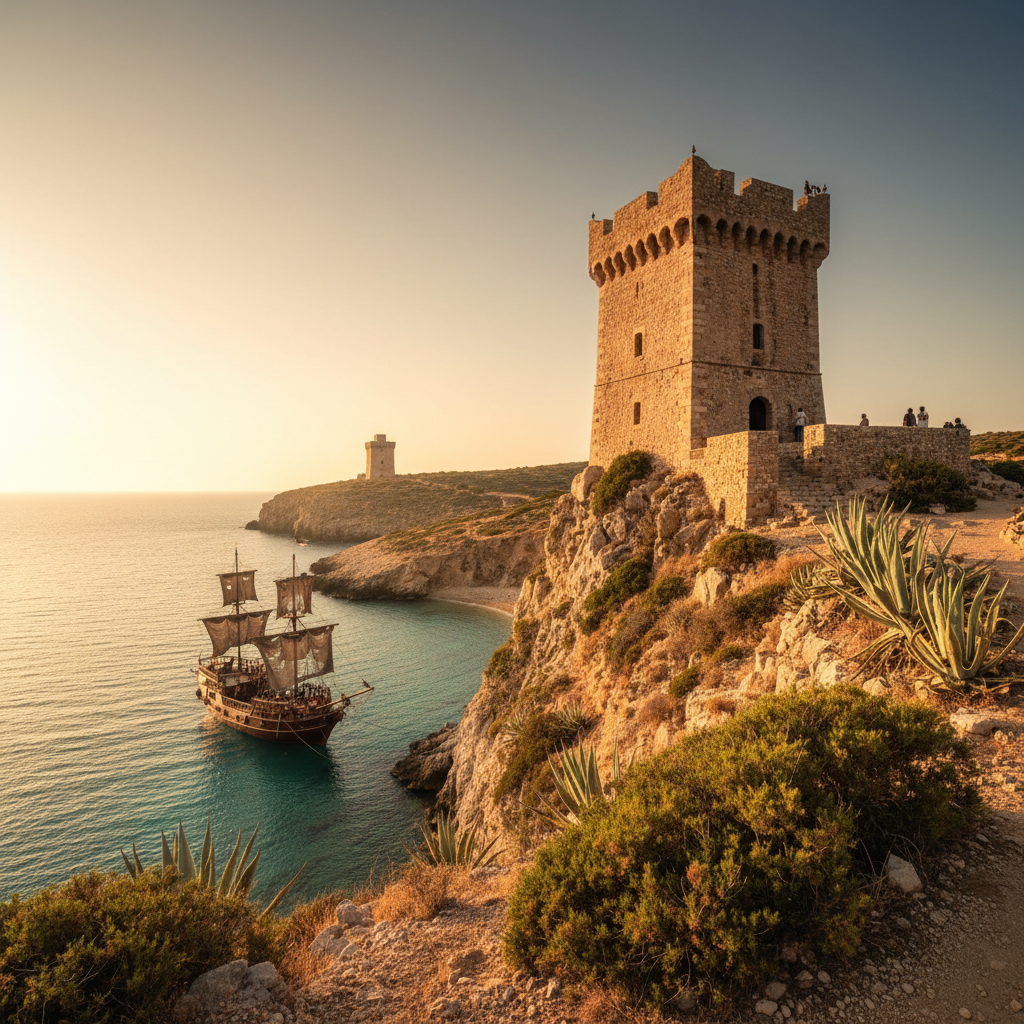
Beyond Dalt Vila, the island’s primary defence against corsair incursions lay in its intricate network of watchtowers, or torres de defensa. These weren't just isolated structures; they were part of a sophisticated communication system. Each tower was strategically placed to be within visual range of at least one other, allowing for rapid transmission of warnings across the island using smoke signals by day and fire by night. Imagine the anxiety of the watchman, ever vigilant, scanning the shimmering Mediterranean for the tell-tale silhouette of a pirate galley.
There were once around 20 such towers ringing Ibiza’s coastline, and many are still remarkably preserved, offering stunning views and a tangible connection to this fraught past. These towers, typically circular and stone-built, often had a single, elevated entrance accessible only by a rope ladder, making them difficult to assault. Inside, a small garrison of torreros (tower keepers) would live, their lives a monotonous routine punctuated by moments of intense fear and crucial action.
Exploring Specific Towers: North & West Coasts
Let's embark on a virtual tour of some of the most notable watchtowers, starting with the north and west coasts. These areas were particularly vulnerable due to their rugged coastlines with numerous coves perfect for secret landings.
Torre des Savinar (Cap des Jueu)
Often referred to as the 'Pirate Tower', Torre des Savinar is arguably the most iconic and frequently photographed watchtower on the island, primarily due to its breathtaking views of Es Vedrà and Es Vedranell. Perched dramatically on the cliff edge on Cap des Jueu, near Cala d’Hort, this tower was built in 1756 by engineer Joan Ballester. While technically not a watchtower in the sense of actively signalling, its strategic position meant it served as an observation point. The hike to the tower is relatively easy from the car park near the Es Vedrà viewpoint, a walk of about 15 minutes, but wear sturdy shoes as the path can be uneven. There's no direct access inside the tower, but the panorama itself is the main draw. It's an unforgettable spot for a sunset, and understanding its original purpose adds a poignant layer to the magical scene. This area is also a fantastic spot for nature walks; check out our guide on [/hubs/hiking-nature].
Torres d'en Rovira (Platges de Comte)
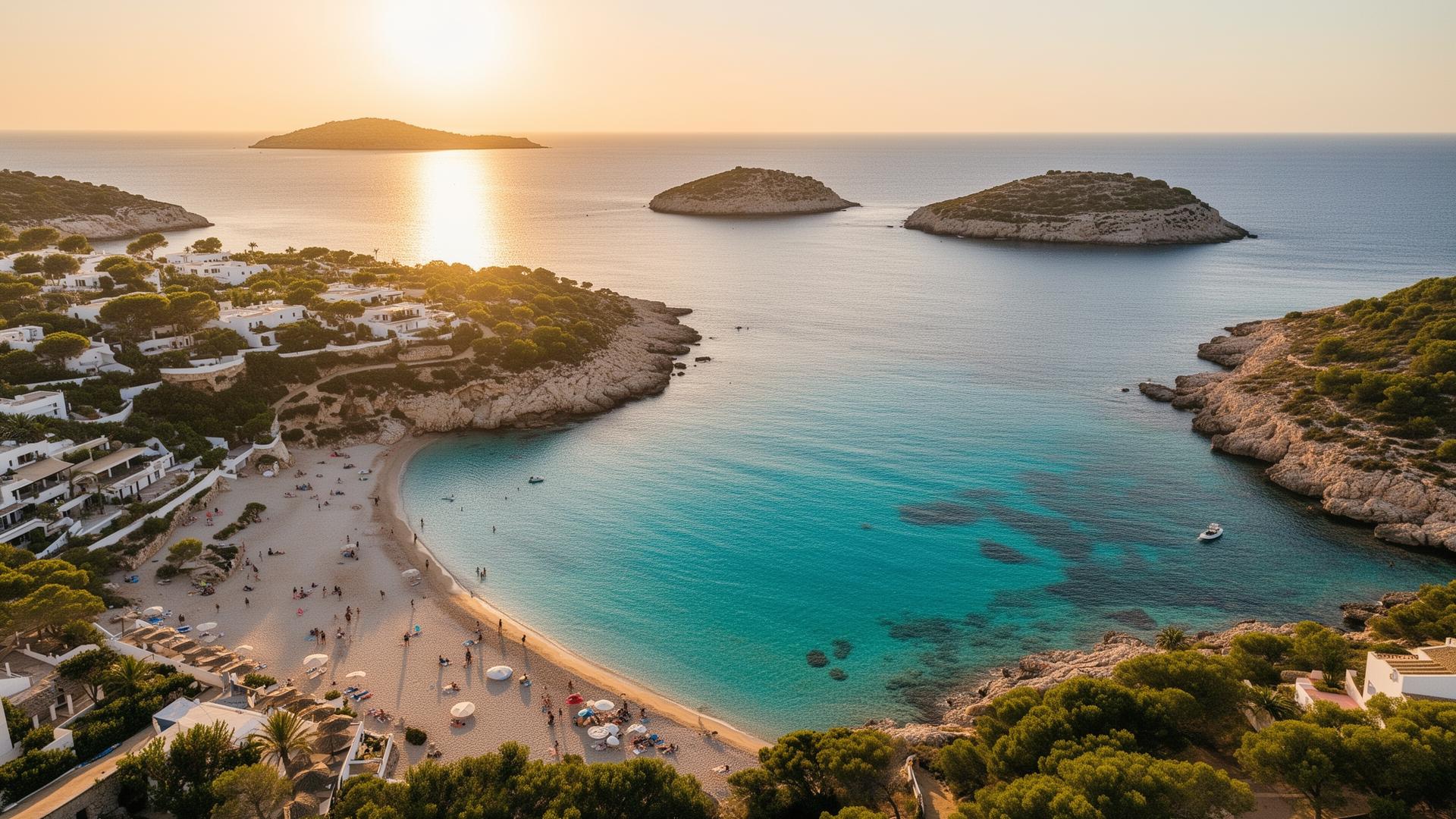
Situated above the stunning Platges de Comte (Cala Conta), this tower offers another superb vantage point, overlooking the small islands of S'illa des Bosc, Conejera, and Es Vedrà. Built in the late 18th century, it played a vital role in guarding this popular stretch of coastline. You can easily walk to it from the main beach car park. While it offers no internal access, the views across the turquoise waters, particularly at sunset, are spectacular. Consider a sundowner drink at one of the beach bars like Sunset Ashram afterwards, contemplating the generations who stood guard here.
Torre des Molar (Portitxol/Sant Joan)
Heading to the rugged north, Torre des Molar guards the serene bay of Cala Portitxol, a beautiful, undeveloped gem often frequented by local hikers and boaters. This tower, built in the late 16th century, stands testament to the need for protection even in more isolated areas. The trek to this tower is a bit more demanding, requiring a walk along coastal paths from Sant Mateu, or a more direct, but steep, route from near Cala Portitxol itself. It's a true reward for those seeking solitude and raw natural beauty, offering panoramic views of the northern coastline and a glimpse into a time when this was a frontline.
Exploring Specific Towers: South & East Coasts
The south and east coasts, with their more accessible beaches and proximity to the capital, were equally critical for defence.
Torre de sa Sal Rossa (Ses Salines)
This tower, located at the eastern end of Ses Salines beach (near Experimental Beach Ibiza), stands unique for its square rather than circular design. Known locally as 'Torre de ses Portes', it was crucial for protecting the lucrative salt flats, which were economically vital to Ibiza. Built in the mid-16th century, it was a significant early addition to the island's defences. Its accessible location means it's an easy visit if you're enjoying a day at Ses Salines. You can walk right up to it, offering a tangible sense of its defensive scale. Imagine pirates attempting to land here, under the watchful eye of the torreros!
Torre d’en Valls (Pou des Lleo / Sant Carles)
Positioned strategically overlooking the distinctive rocky cove of Pou des Lleó, Torre d’en Valls is a well-preserved watchtower on the northeast coast, dating back to 1762. It provided a crucial link in the communication chain between the northern and eastern parts of the island and was specifically built to deter corsair landings in the numerous small coves in this area. You can access it via a short, unpaved road from the main road to Pou des Lleó. The views across the sparkling eastern Mediterranean are expansive, sometimes even revealing Mallorca on a clear day. There's a charming chiringuito at Pou des Lleó where you can enjoy fresh fish after your historical excursion.
Torre de ses Portes (Es Freus)
While often conflated with Torre de sa Sal Rossa due to a similar local name, the actual Torre de ses Portes is located on the tiny islet of S’Espalmador, just off the northern tip of Formentera, overlooking the treacherous strait of Es Freus between Ibiza and Formentera. This specific tower was crucial for controlling maritime traffic and warning of approaches from the south. While not on Ibiza itself, its role was integral to the overall defensive strategy. Visiting it requires a boat trip to S'Espalmador, a popular excursion from Ibiza.
Fortified Churches: Sacred Sanctuaries
When the watchtowers spotted an incoming threat, and the warning signals spread, where did the villagers flee? Not to Dalt Vila, which was primarily for the city's inhabitants and administrators. For the rural population, refuge lay in their churches. Ibiza's country churches are unlike those in many other parts of Europe; they are robust, austere, and built with defence in mind. These iglesias fortificadas (fortified churches) served as essential safe havens during pirate attacks.
Typical features include high, thick walls, small, high-set windows (often more like loopholes than conventional windows), and large, heavy wooden doors often reinforced with metal. Many also had saeteras (arrow slits) or matacanes (machicolations, projecting structures from which missiles could be dropped on attackers) on their upper levels. The bell towers were not just for bells; they often doubled as lookouts or defensive positions.
Sant Antoni de Portmany Church
One of the best examples is the church of Sant Antoni de Portmany. Perched on a hill overlooking the town and its famous bay, this 14th-century church is an imposing structure. Its robust, almost castle-like appearance, with battlements and thick walls, clearly reveals its dual purpose. Climb the steps to the church square, and take a moment to admire its formidable presence. You can almost hear the echoes of frightened villagers seeking solace and protection within its stone embrace. After visiting, explore the bustling Sant Antoni town, perhaps finding a local restaurant in the pedestrianized main street for lunch.
Santa Eulàlia des Riu Church (Puig de Missa)
Another outstanding example, renowned for its architectural beauty and strategic position, is the fortified church of Santa Eulàlia des Riu, perched atop the Puig de Missa hill. Dating back to the 16th century, its whitewashed walls and charming appearance belie its formidable defensive capabilities. The approach to the church itself, winding up the hill past traditional houses, offers a glimpse into how a rural community structured itself for survival. The views of the Santa Eulàlia river and the coastline from here are magnificent. Exploring the church and the quaint village around it is a wonderfully evocative experience. Don't miss the small ethnography museum nearby, which sheds light on rural life, including aspects related to pirate defence.
Sant Jordi de Ses Salines Church
Located just a few kilometers from Ibiza town, the church of Sant Jordi is unique as it's the only one on the island that retains its full battlements. Built as early as the 14th century, its exterior is unequivocally military in design, resembling a small fortress. Its location, near the economically vital salt flats, underscored the need for such robust protection. You can walk around its impressive exterior and truly appreciate its defensive architecture. The interior is simpler but still holds historical charm.
The End of an Era, Echoes in the Present
The threat of piracy began to wane in the 19th century, thanks to improved naval technology, more powerful European navies, and the eventual suppression of the Barbary states. By the mid-1800s, the watchtowers and fortified churches had largely become obsolete for their original defensive purpose. However, their legacy is indelible.
Today, these structures are cherished historical monuments, silent sentinels guarding the memories of a challenging past. They offer unparalleled panoramic views, fantastic photo opportunities, and a profound sense of connection to Ibiza’s enduring spirit. When you visit a watchtower, or enter a fortified church, you’re not just seeing an old building; you're feeling the anxiety, the resilience, and the collective will of previous generations of Ibicencos. You're touching a history that profoundly shaped how the island is today, from its architectural heritage to its close-knit communities.
For those interested in exploring more about the island's fascinating past, consider diving into our article about [/culture-history]. The tales embedded in these stones are just one chapter in Ibiza’s rich and multifaceted story, a narrative far deeper than just its modern reputation for electronic music and beautiful beaches. So next time you're enjoying a beautiful sunset from a coastal viewpoint, spare a thought for the torreros who stood there before you, not admiring the view, but scanning the horizon for danger.