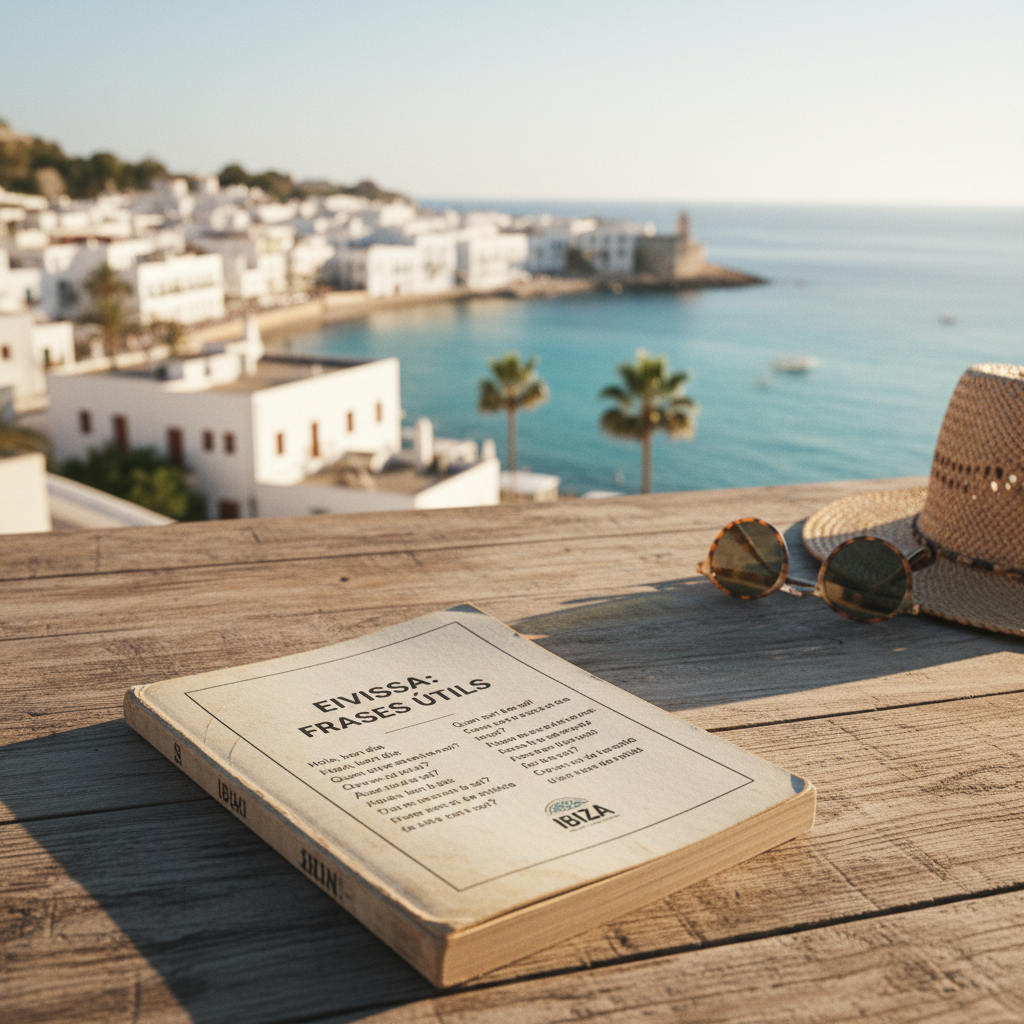
Useful Spanish & Catalan Phrases for Ibiza
Everything you need to know about useful spanish & catalan phrases for ibiza in Ibiza — practical info, local tips and where to go next.
Why Bother with a Few Phrases? Understanding Ibiza's Linguistic Landscape
Alright, let's get one thing straight from the jump: you can absolutely navigate Ibiza with English. Most hotel staff, restaurant servers in tourist hubs like Playa d'en Bossa and San Antonio, and certainly anyone working in the superclubs will speak excellent English. But here's the "why bother" – it opens doors. It shows respect. It transforms a transaction into an interaction. And let's be honest, it's just plain fun to try.
Ibiza is a unique blend linguistically. While Spanish (Castellano) is the official language of Spain and therefore the most widely spoken, the Balearic Islands, including Ibiza, have their own co-official language: Catalan. Specifically, the dialect spoken here is called Eivissenc. Don't panic; while Eivissenc has its nuances, if you tackle a few basic Catalan phrases, you'll be understood and appreciated. Think of it like this: if you’re ordering a café con leche at a bustling café in Sant Josep de sa Talaia, a "bon dia" (good day in Catalan) will almost always be met with a warmer smile than a Spanish "buenos días." It shows you’ve taken a moment to connect with the local culture beyond just the beach and the beats.
This guide isn't about making you fluent, far from it. It's about equipping you with practical, impactful phrases – Spanish and Catalan – that will elevate your Ibiza experience, whether you're haggling at Las Dalias Hippy Market, asking for directions to a secluded cove like Cala Llentrisca, or simply ordering a bocadillo at a roadside chiringuito.
Essential Greetings & Goodbyes: More Than Just "Hola"
First impressions matter, even if it's just a quick "hello." The small effort here goes a long way towards connecting with locals.
Spanish (Castellano):
- Hola: (OH-lah) – Hello. The universal greeting, always safe.
- Buenos días: (BWEH-nos DEE-ahs) – Good morning. Use until midday or early afternoon.
- Buenas tardes: (BWEH-nas TAR-des) – Good afternoon/evening. Use from afternoon until sundown.
- Buenas noches: (BWEH-nas NO-chays) – Good evening/good night. Use after sundown, or when saying goodbye for the night.
- Adiós: (ah-dee-OHS) – Goodbye. Simple and effective.
- Hasta luego: (AHS-tah LWEH-go) – See you later. Often more casual than Adiós.
- Hasta mañana: (AHS-tah mah-NYAH-nah) – See you tomorrow.
Catalan (Eivissenc):
- Bon dia: (bon DEE-ah) – Good morning. The most important Catalan greeting for daytime.
- Bona tarda: (BOH-nah TAR-dah) – Good afternoon.
- Bona nit: (BOH-nah NEET) – Good evening/good night.
- Adéu: (ah-DEH-oo) – Goodbye.
- Fins després: (feens des-PRAYSS) – See you later.
Insider Tip: When entering a small local shop in, say, Santa Gertrudis or a lesser-known restaurant in Puig d'en Valls, a "bon dia" or "bona tarda" in Catalan will immediately set a positive tone and convey an appreciation for the local culture. Don't be surprised if the response is in Spanish, but the effort is recognized.
Navigating Menus & Making Orders: Beyond "The Usual"
This is where language skills truly come in handy. Ibiza's culinary scene is fantastic, from high-end dining in Marina Botafoch to rustic payés cuisine inland. Being able to ask about ingredients or make a specific request can make all the difference.
General Phrases:
- La carta, por favor: (lah KAR-tah, por fah-VOR) – The menu, please. (Spanish)
- El menú, per favor: (el meh-NOO, per fah-VOR) – The menu, please. (Catalan) – Note: "carta" is also understood in Catalan, but "menú" is common for daily specials.
- ¿Qué me recomienda?: (keh meh reh-koh-MYEN-dah) – What do you recommend? (Spanish)
- Què em recomana?: (keh em reh-koh-MAH-nah) – What do you recommend? (Catalan)
- Quisiera... / Me gustaría...: (kee-SYEH-rah / meh goos-tah-REE-ah) – I would like... (Spanish)
- Voldria... / M'agradaria...: (vol-DREE-ah / mah-grah-dah-REE-ah) – I would like... (Catalan)
- Soy vegetariano/a: (soy veh-heh-tah-RYAH-no/nah) – I am vegetarian (m/f). (Spanish)
- Sóc vegetarià/ana: (sok veh-heh-tah-ree-AH/NAH) – I am vegetarian (m/f). (Catalan)
- Soy vegano/a: (soy veh-GAH-no/nah) – I am vegan (m/f). (Spanish)
- Sóc vegà/ana: (sok veh-GAH/NAH) – I am vegan (m/f). (Catalan)
- ¿Contiene frutos secos / gluten / lácteos?: (kon-TYEH-neh FROO-tos SEH-kos / GLOO-ten / LAK-teh-os) – Does it contain nuts / gluten / dairy? (Spanish)
- Conté fruits secs / gluten / làctics?: (kon-TEH FROOTS seks / GLOO-ten / LAK-teeks) – Does it contain nuts / gluten / dairy? (Catalan)
- Sin...: (seen) – Without... (Spanish)
- Sense...: (SEN-seh) – Without... (Catalan) e.g., "café con leche sin lactosa" or "cafè amb llet sense lactosa" (lactose-free coffee with milk).
- El agua, por favor: (el AH-gwah, por fah-VOR) – The water, please. (Spanish)
- L'aigua, per favor: (lah-Y-gwah, per fah-VOR) – The water, please. (Catalan)
- La cuenta, por favor: (lah KWEN-tah, por fah-VOR) – The bill, please. (Spanish)
- El compte, per favor: (el KOHMP-teh, per fah-VOR) – The bill, please. (Catalan)
- ¿Se puede pagar con tarjeta?: (seh PWEH-deh pah-GAR kon tar-HE-tah) – Can I pay by card? (Spanish)
- Es pot pagar amb targeta?: (ess pot pah-GAR amb tar-JEH-tah) – Can I pay by card? (Catalan)
Ordering Drinks:
- Un vino tinto/blanco/rosado: (oon VEE-no TEEN-toh/BLAHN-koh/roh-SAH-doh) – A red/white/rosé wine. (Spanish)
- Un vi negre/blanc/rosat: (oon vee NEH-grah/blank/roh-SAT) – A red/white/rosé wine. (Catalan)
- Una cerveza: (OO-nah ser-VEH-thah) – A beer. (Spanish) – Often you'll specify "una caña" (a small draft beer) or "una jarra" (a large draft beer).
- Una cervesa: (OO-nah ser-VEH-sah) – A beer. (Catalan) – Again, ask for "una canya" or "una gerra."
- Un café solo: (oon kah-FEH SOH-lo) – An espresso. (Spanish)
- Un cafè sol: (oon kah-FEH sol) – An espresso. (Catalan)
- Un café con leche: (oon kah-FEH kon LEH-cheh) – A coffee with milk. (Spanish)
- Un cafè amb llet: (oon kah-FEH amb lyeh) – A coffee with milk. (Catalan)
- Un zumo de naranja natural: (oon THOO-mo deh nah-RAHN-hah nah-too-RAL) – A fresh orange juice. (Spanish)
- Un suc de taronja natural: (oon soo de tah-RON-jah nah-too-RAL) – A fresh orange juice. (Catalan)
Local Delicacies to Ask About (and pronounce!):
- Sobrasada: (soh-brah-SAH-dah) – A cured sausage, often spread on bread.
- Flaó: (flah-OH) – A traditional Ibizan cheesecake-like dessert, often flavored with mint.
- Hierbas Ibicencas: (YER-bas ee-bee-THEN-kas) – An anise-flavored liqueur, a popular digestif. Don't leave without trying it!
Insider Tip: When dining at a traditional finca restaurant in the tranquil north, like Es Caliu in Sant Joan, asking for your sofrit pagès (a hearty meat and potato stew) with a polite "si us plau" (please in Catalan) might just get you an extra smile, and perhaps a slightly larger portion! For more on the delicious local cuisine, check out our guide to Food & Drink in Ibiza.
Getting Around & Asking for Directions: More Than Just GPS
While Google Maps is fantastic, sometimes you need to ask a local for the best way to Cala Boix or to find a specific bar down a winding street in Dalt Vila.
General Phrases:
- ¿Dónde está...?: (DON-deh ess-TAH) – Where is...? (Spanish)
- On és...?: (on ES) – Where is...? (Catalan)
- ¿Cómo llego a...?: (KOH-mo YEH-go ah) – How do I get to...? (Spanish)
- Com arribo a...?: (kom ah-rree-BO ah) – How do I get to...? (Catalan)
- A la izquierda: (ah lah eeth-KYER-dah) – To the left. (Spanish)
- A l'esquerra: (ah lah es-KEH-rrah) – To the left. (Catalan)
- A la derecha: (ah lah deh-REH-chah) – To the right. (Spanish)
- A la dreta: (ah lah DREH-tah) – To the right. (Catalan)
- Todo recto: (TOH-doh REK-toh) – Straight ahead. (Spanish)
- Tot recte: (tot REK-teh) – Straight ahead. (Catalan)
- Cerca de aquí: (SER-kah deh ah-KEE) – Near here. (Spanish)
- A prop d'aquí: (ah prop dah-KEE) – Near here. (Catalan)
- Lejos de aquí: (LEH-hos deh ah-KEE) – Far from here. (Spanish)
- Llunx d'aquí: (llyoonsh dah-KEE) – Far from here. (Catalan)
- Una parada de autobús: (OO-nah pah-RAH-dah deh ow-toh-BOOS) – A bus stop. (Spanish)
- Una parada d'autobús: (OO-nah pah-RAH-dah dah-oo-toh-BOOS) – A bus stop. (Catalan)
- Una estación de taxis: (OO-nah es-tah-THYOHN deh TAK-sees) – A taxi stand. (Spanish)
- Una estació de taxis: (OO-nah es-tah-SEE-oh deh TAK-sees) – A taxi stand. (Catalan)
Asking for Clarity:
- ¿Puede repetir, por favor?: (PWEH-deh reh-peh-TEER, por fah-VOR) – Can you repeat, please? (Spanish)
- Pot repetir, per favor?: (pot reh-peh-TEER, per fah-VOR) – Can you repeat, please? (Catalan)
- Más despacio, por favor: (mas des-PAH-thyoh, por fah-VOR) – Slower, please. (Spanish)
- Més a poc a poc, per favor: (mes ah pok ah pok, per fah-VOR) – Slower, please. (Catalan)
Insider Tip: When grabbing a pre-club bite at a traditional bocadillo shop near the port in Ibiza Town (Vila), asking "Quina direcció va el bus cap a Sant Antoni?" (Which direction does the bus go towards Sant Antoni?) in Catalan might get you a more detailed explanation of the new A-line night buses for 2025/2026, which often have slightly tweaked routes. For more detailed information, our Transport in Ibiza guide can also help.
Shopping & Bargaining (Gently!): Beyond Just Pointing
Whether you’re eyeing a unique piece of jewelry at a small boutique in Dalt Vila or a souvenir at a market stall, a few phrases can enrich the experience. True "bargaining" is less common in Ibiza than in some other destinations, but it doesn't hurt to inquire gently, especially at markets.
General Phrases:
- ¿Cuánto cuesta?: (KWAN-toh KWES-tah) – How much does it cost? (Spanish)
- Quant costa?: (kwant KOS-tah) – How much does it cost? (Catalan)
- Es muy caro: (es moo-Y KAH-roh) – It's very expensive. (Spanish)
- És molt car: (es molt KAR) – It's very expensive. (Catalan) – Use this sparingly and good-naturedly.
- ¿Hay alguna oferta?: (ay al-GOO-nah oh-FER-tah) – Is there a special offer? (Spanish)
- Hi ha alguna oferta?: (ee ah al-GOO-nah oh-FER-tah) – Is there a special offer? (Catalan)
- ¿Tienen algo más barato?: (TYEH-nen AL-go mas bah-RAH-toh) – Do you have anything cheaper? (Spanish)
- Teniu quelcom més barat?: (teh-NEE-oo kel-KOM mes bah-RAT) – Do you have anything cheaper? (Catalan)
- Sólo estoy mirando: (SOH-lo es-TOY mee-RAN-doh) – I'm just looking. (Spanish)
- Només estic mirant: (noh-MES es-TEEK mee-RANT) – I'm just looking. (Catalan)
- Me lo llevo: (meh lo YEH-vo) – I'll take it. (Spanish)
- M'ho quedo: (moh KEH-doh) – I'll take it. (Catalan)
- Gracias: (GRAH-thyas) – Thank you. (Spanish)
- Gràcies: (GRAH-see-es) – Thank you. (Catalan)
- De nada: (deh NAH-dah) – You're welcome. (Spanish)
- De res: (deh RESS) – You're welcome. (Catalan)
At the Markets (e.g., Punta Arabí, Las Dalias):
- ¿Es el mejor precio?: (es el meh-HOR PREH-thyoh) – Is this the best price? (Spanish)
- És el millor preu?: (es el mee-LLOR pre-oo) – Is this the best price? (Catalan) – Again, friendly and with a smile.
- ¿Acepta efectivo?: (ah-thep-TAH eh-fek-TEE-vo) – Do you accept cash? (Spanish) – Many smaller stalls prefer or require cash.
- Accepta efectiu?: (ak-SEP-tah eh-fek-TEE-oo) – Do you accept cash? (Catalan)
Insider Tip: When shopping for those distinctive Ibizan sandals (espadrilles) in a small artisanal shop in Sant Miquel, trying a few Catalan phrases like "Són fetes a mà?" (Are they handmade?) and showing genuine interest in the craft can often lead to a more pleasant conversation and perhaps even a small discount on a pair that might otherwise cost €70-€90. More local shopping tips can be found in our Shopping in Ibiza article.
Emergency & Urgent Situations: Just in Case
While we all hope for a smooth trip, knowing these phrases can be genuinely important.
General Phrases:
- **¡Ayuda!: **(ah-YOO-dah) – Help! (Spanish & Catalan)
- ¡Socorro!: (soh-KOH-rro) – Emergency help! (Spanish)
- Crida socors!: (KREE-dah soh-KORS) – Emergency help! (Catalan)
- Necesito un médico: (neh-the-SEE-toh oon MEH-dee-koh) – I need a doctor. (Spanish)
- Necessito un metge: (neh-seh-SEE-toh oon MET-jeh) – I need a doctor. (Catalan)
- Necesito un hospital: (neh-the-SEE-toh oon os-pee-TAL) – I need a hospital. (Spanish)
- Necessito un hospital: (neh-seh-SEE-toh oon os-pee-TAL) – I need a hospital. (Catalan)
- ¿Dónde está la farmacia más cercana?: (DON-deh es-TAH lah far-MAH-thyah mas ther-KAH-nah) – Where is the nearest pharmacy? (Spanish)
- On és la farmàcia més propera?: (on ES lah far-MAH-see-ah mes proh-PEH-rah) – Where is the nearest pharmacy? (Catalan)
- He perdido mi pasaporte/bolso: (eh per-DEE-doh mee pah-sah-POR-teh/BOL-so) – I've lost my passport/bag. (Spanish)
- He perdut el meu passaport/bolso: (eh per-DOOT el meu pah-sah-PORT/BOL-so) – I've lost my passport/bag. (Catalan)
- Estoy enfermo/a: (es-TOY en-FER-mo/mah) – I am sick (m/f). (Spanish)
- Estic malalt/a: (es-TEEK mah-LALT/tah) – I am sick (m/f). (Catalan)
- Me duele aquí: (meh DWEH-leh ah-KEE) – It hurts here. (Spanish)
- Em fa mal aquí: (em fah mal ah-KEE) – It hurts here. (Catalan)
- Llama a la policía: (YAH-mah ah lah poh-lee-THYAH) – Call the police. (Spanish)
- Crida la policia: (KREE-dah lah poh-lee-SEE-ah) – Call the police. (Catalan)
Useful Numbers (for your phone!):
- 112: European emergency number, works for police, ambulance, fire.
Insider Tip: While most larger pharmacies in Ibiza Town or Sant Antoni will have English-speaking staff, if you're in a smaller pueblo like Sant Carles asking "Em podria recomanar alguna cosa per a la picada d'un mosquit?" (Could you recommend something for a mosquito bite?) in Eivissenc will likely get you personal attention rather than just pointing you to the standard repellent.
Social Courtesies & Small Talk: Beyond the Practical
These phrases are about being polite and engaging, which is simply a joy when traveling.
- Por favor: (por fah-VOR) – Please. (Spanish)
- Si us plau: (see oos PLOW) – Please. (Catalan)
- Perdón / Con permiso: (per-DON / kon per-MEE-so) – Excuse me (to get attention/pass). (Spanish)
- Perdó / Amb permís: (per-DOH / amb per-MEES) – Excuse me (to get attention/pass). (Catalan)
- Lo siento: (lo SYEN-toh) – I'm sorry. (Spanish)
- Ho sento: (oh SEN-toh) – I'm sorry. (Catalan)
- ¿Habla inglés?: (AH-blah een-GLES) – Do you speak English? (Spanish)
- Parla anglès?: (PAR-lah an-GLESS) – Do you speak English? (Catalan)
- No entiendo: (no en-TYEN-doh) – I don't understand. (Spanish)
- No ho entenc: (no oh en-TENK) – I don't understand. (Catalan)
- Un poco: (oon POH-ko) – A little. (Spanish)
- Una mica: (OO-nah MEE-kah) – A little. (Catalan)
- Sí / No: (see / no) – Yes / No. (Spanish & Catalan)
- ¿Qué tal?: (keh TAL) – How are you? (Spanish, informal)
- Com anam?: (kom ah-NAM) – How are you? (Catalan, informal, very Eivissenc!)
- Bien, gracias: (byen, GRAH-thyas) – Fine, thank you. (Spanish)
- Bé, gràcies: (beh, GRAH-see-es) – Fine, thank you. (Catalan)
- ¿De dónde eres?: (deh DON-deh EH-res) – Where are you from? (Spanish)
- D'on ets?: (don ets) – Where are you from? (Catalan)
- Soy de [país]: (soy deh [pah-EES]) – I am from [country]. (Spanish)
- Sóc de [país]: (sok deh [pah-EES]) – I am from [country]. (Catalan)
Compliments:
- ¡Qué bonito/a!: (keh boh-NEE-toh/tah) – How beautiful! (m/f) (Spanish)
- Que bonic/a!: (keh boh-NEEK/ah) – How beautiful! (m/f) (Catalan) – Use for a view, an item, a child.
- ¡Qué rico/a!: (keh RREE-koh/kah) – How delicious! (m/f) (Spanish) – Perfect for food.
- Que bo/a!: (keh boh/ah) – How delicious! (m/f) (Catalan)
Insider Tip: When chatting casually with a bartender at a beach club in Cala Jondal, even if they speak perfect English, asking "Com anam?" with a genuine smile might get you a slightly stronger pour in your cocktail or an insight into their favorite DJ playing at DC-10 next weekend. For more on the vibrant social scene, check out our Nightlife in Ibiza guide.
Numbers & Time: Crucial for Practicalities
From ferry schedules to bus times, knowing your numbers is key.
Numbers 1-10:
| Number | Spanish | Catalan |
|---|---|---|
| 1 | Uno | Un/Una |
| 2 | Dos | Dos |
| 3 | Tres | Tres |
| 4 | Cuatro | Quatre |
| 5 | Cinco | Cinc |
| 6 | Seis | Sis |
| 7 | Siete | Set |
| 8 | Ocho | Vuit |
| 9 | Nueve | Nou |
| 10 | Diez | Deu |
Larger Numbers (examples):
- Cien/Cent: (THYEN / SENT) – One hundred.
- Mil: (MEEL) – One thousand.
- Diez euros: (DYETH EH-oo-ros) – Ten Euros. (Spanish)
- Deu euros: (DEH-oo EH-oo-ros) – Ten Euros. (Catalan)
Asking about Time:
- ¿Qué hora es?: (keh OH-rah es) – What time is it? (Spanish)
- Quina hora és?: (KEE-nah OH-rah es) – What time is it? (Catalan)
- A qué hora...?: (ah keh OH-rah) – At what time...? (Spanish)
- A quina hora...?: (ah KEE-nah OH-rah) – At what time...? (Catalan)
- Example: "¿A qué hora sale el ferry a Formentera?" / "A quina hora surt el ferri a Formentera?" (What time does the ferry to Formentera leave?)
Insider Tip: If you're coordinating with a local taxi driver for a late-night pickup from Pacha, confirming "A les quatre de la matinada, sí?" (At 4 AM, yes?) in Catalan, rather than just "four o'clock," adds precision and reduces the chance of miscommunication, particularly given the dynamic schedules of the island. Our Formentera guide has more on ferry times.
Pronunciation Pointers & Further Resources
Don't be shy! Locals genuinely appreciate the effort. A few key pronunciation differences to be aware of:
- "C" before "e" or "i": In most of Spain (Castilian), it's pronounced like "th" in "thin" (e.g., "gracias" becomes "gra-thyas"). In Catalan and parts of southern Spain, it's more like an "s" sound. Both are perfectly understood in Ibiza.
- "Ll": Often like the "y" in "yes" or the "j" in "jump" ("llama" - YAH-mah).
- "R": A rolled "r" (trilled) is essential for words like "perro" (dog) or "caro" (expensive). Practice makes perfect!
- "X" in Catalan: Can be like "sh" (e.g., "xocolata" - chocolate) or "ch." In Eivissenc, it's often more of a "sh" sound.
For Further Learning:
- Duolingo / Babbel: Great for basic Spanish lessons.
- Google Translate: Handy for quick lookups on the go, often with audio pronunciation.
- Local Radio (e.g., Radio Ibiza Total): Listening, even if you don't understand, helps you get accustomed to the rhythm and sounds of both Spanish and Catalan.
Embracing the Spirit of Ibiza Through Language
Using a few phrases isn't just about getting by; it's about enriching your time on the White Isle. It's about connecting with the payeses (local farmers) at a roadside fruit stall near Sant Rafel, understanding the history imparted by a local guide in the ancient streets of Dalt Vila, or simply making a lasting impression on the staff at your favorite chiringuito in Cala Comte. It transforms you from a tourist into a welcomed guest. So, go on, give it a try. The worst that can happen is a friendly correction, and the best? A richer, more authentic Ibiza experience. Bon viatge! (Catalan for "good journey!")