Traditional Ibicenco Architecture Explained
Everything you need to know about traditional ibicenco architecture explained in Ibiza — practical info, local tips and where to go next.
The Soul of the Sant Antoni: Discovering the Ibicenco Finca
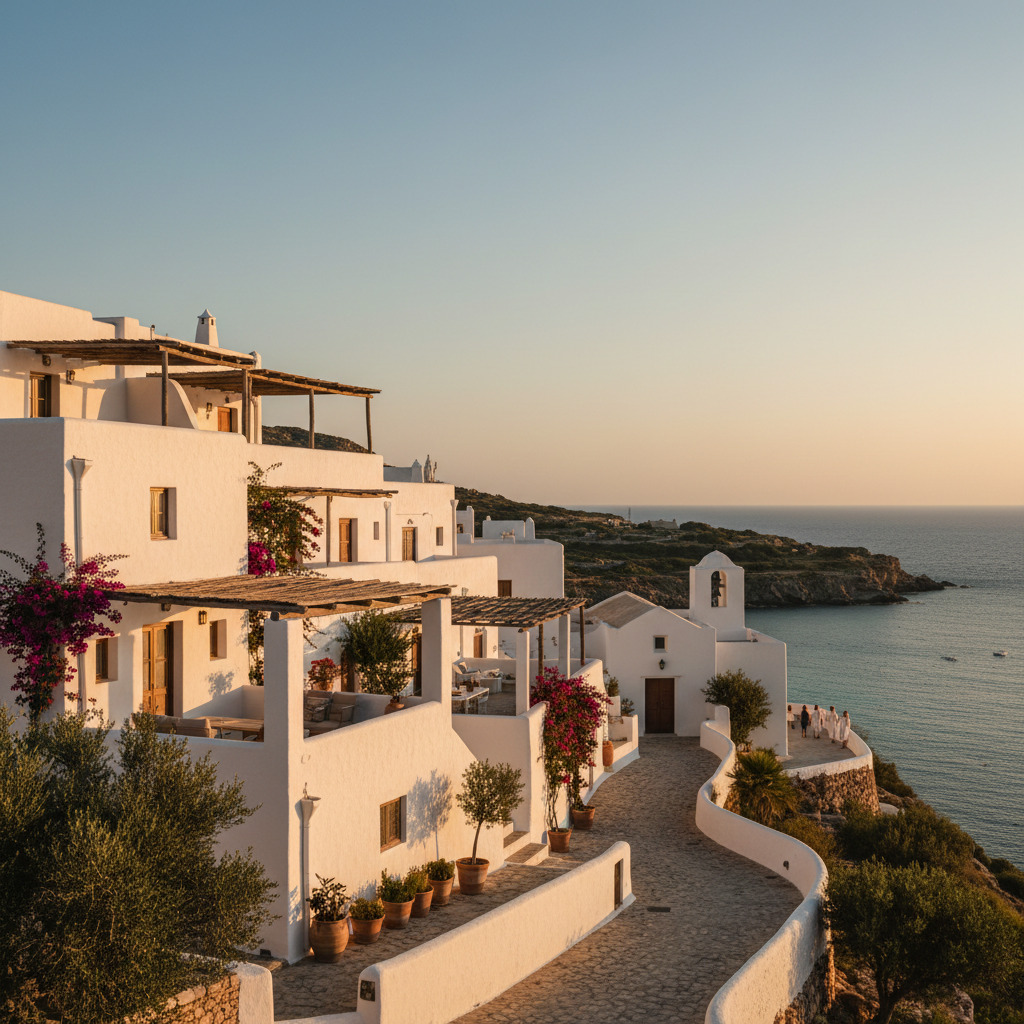
Step beyond the pulsating beats of Playa d'en Bossa and the chic marinas of Ibiza Town, and you'll discover the island's true architectural heart: the finca ibicenca. These iconic, whitewashed farmhouses, scattered across the island's interior, are far more than just dwellings; they are living testaments to centuries of resilient ingenuity, deeply rooted in the island's unique geology, climate, and a heritage shaped by successive civilizations. Understanding the finca is to understand Ibiza itself – a stark, beautiful land that demanded practical, unadorned solutions.
The term "finca" broadly refers to a rural property, but in the context of Ibicenco architecture, it specifically denotes the traditional farmhouse, a vernacular style that evolved organically over millennia. It's a style born not of grand design or aristocratic patronage, but from necessity, utility, and the readily available raw materials. Forget flamboyant decorations or ostentatious facades; the beauty of the finca lies in its unpretentious functionality and its harmonious relationship with the immediate landscape.
Origins and Influences: A Melting Pot of Practicality
The elemental forms of Ibicenco architecture trace back to Punic and Roman settlements, but it was the long period of Arabic rule (9th to 13th centuries AD) that profoundly shaped the building techniques and aesthetic that became synonymous with the finca. The distinct modularity, the thick walls for thermal regulation, the flat roofs known as terrados, and the emphasis on enclosed courtyards (though not always present in every finca) are all legacies of this era. Add to this the subsequent Catalan influence, primarily in terms of internal layouts and specific agricultural outbuildings, and you have a blend of practical adaptations.
Crucially, the fincas were built by their inhabitants or by local master builders known as treballadors de la pedra (stone workers), using materials sourced directly from the land. This localized approach meant an intimate understanding of the environment and a sustainable building practice long before the term became fashionable. There was no architectural master plan for the island; rather, a universal design language emerged from shared challenges and available resources.
The Cornerstones of Construction: Raw Materials and Resourcefulness
The defining characteristic of a traditional finca is its construction from readily available local materials. This wasn't a choice for aesthetics but for survival.
- Stone: The backbone of every finca is its thick stone walls, typically 80 cm to 1.2 meters thick. These were constructed using local limestone, often quarried directly from the property or nearby fields. The stones were roughly cut and cemented together with a mixture of red earth (terra roja), lime, and sand. The sheer mass of these walls provides incredible thermal inertia, keeping interiors cool during scorching summers and offering insulation against the milder, yet damp, winters. You can still see these ancient quarries sometimes, like the one near the road to Es Cubells.
- Sabina wood (Juniperus phoenicea): This endemic, hard, and remarkably resilient wood was prized for its structural integrity and resistance to rot and insects. Sabina beams, often left in their natural, gnarled state, span the ceilings, supporting the flat roofs. Its distinctive reddish hue and aromatic scent are hallmarks of older fincas. However, due to its slow growth and protected status, its use in new builds is strictly regulated. Visiting some of the older rural churches, such as the one in Sant Miquel de Balansat, provides an excellent example of sabina's enduring strength in their often visible ceiling structures.
- Lime Plaster (Cal): The iconic dazzling white of an Ibicenco finca comes from layers of lime plaster. This material is not merely decorative; it's essential. Lime plaster is breathable, naturally antibacterial, and reflects sunlight, further contributing to the building's thermal efficiency. It also required regular re-plastering, often done annually before Easter, which became a communal ritual, giving the island its characteristic sparkling freshness.
- Red Earth (Terra Roja): Used as a binder in mortar and, sometimes, mixed with lime for a rustic internal plaster, the distinctive reddish-brown soil of Ibiza played a crucial role. This material, along with the other natural elements, gives the finca an organic, earthy feel despite its bright white exterior.
Modular Growth: The Expanding Home
Unlike a single, grand construction, a finca typically began with a humble, rectangular core structure – often a single room known as a casa payesa (peasant house). This original module served multiple functions: living, sleeping, and cooking. As families grew and prosperity increased, additional modules were added linearly or perpendicularly, creating the characteristic asymmetrical, rambling layouts seen today. This organic growth pattern is fundamental to understanding the finca.
- The Porch (Porxo): A crucial addition, the porxo is a covered outdoor space, often with arcades, typically facing south. It served as an extension of the living space, providing shade in summer and shelter in winter, a place for socialising, working, and dining. It often features a built-in stone bench, known as an escanyador.
- Rainwater Cistern (Aljibe or Cisterna): Given Ibiza’s historically dry climate and lack of natural rivers, rainwater collection was paramount. Every finca had an aljibe – an underground cistern – fed by the flat roof. This ingenuity highlights the deep connection between the architecture and the island's scarce resources.
- The Oven (Forno): Usually an external, beehive-shaped structure made of stone and clay, the forno was essential for baking bread and other necessities. It was often integrated into an exterior wall or stands proudly as a separate entity near the kitchen area.
The Flat Roof and Its Secrets: Terrado and Xemeneia
The most distinctive external feature of an Ibicenco finca is its flat roof, or terrado. More than just a cover, the terrado was a multi-functional space:
- Rainwater Collection: As mentioned, it was meticulously designed to channel rainwater via slight inclines to a central collection point that fed the aljibe.
- Drying Area: Crops like figs and traditional Ibicenco peppers (pebràs) were spread out to dry in the sun on the terrado.
- Social Space: In the cool evenings, families would often gather on the terrado for fresh air and stargazing, especially during the hot summer months.
Another unique feature is the xemeneia (chimney). Unlike the often elaborate chimneys of northern Europe, Ibicenco chimneys are typically simple, conical or square structures, distinguished by their small, often ornamental cap. Each region might have slightly variations, but their overall minimalist form remains consistent.
Thermal Harmony: Adapting to the Mediterranean Climate
The design principles of the finca were inherently sustainable and climate-responsive, centuries before the concept was articulated.
- Thick Walls: The massive stone walls act as a thermal buffer, absorbing heat during the day and slowly releasing it at night, naturally regulating indoor temperatures. This kept interiors remarkably cool even when outside temperatures hit 35°C in August.
- Small Windows: Windows are generally small and strategically placed to minimise direct sunlight penetration, especially on south-facing walls. They were often unglazed in older constructions, relying on wooden shutters for privacy and security.
- High Ceilings: The sabina-beamed ceilings are typically high, allowing hot air to rise, creating a cooler living space below.
- Orientation: Fincas were almost always oriented to take advantage of prevailing breezes and to minimise exposure to the intense midday sun, often facing southeast to catch the morning light while remaining shaded in the afternoon.
The Evolution of the Finca: From Farmhouse to Boutique Hotel
While many fincas remain cherished family homes, an increasing number have found new life as luxury villas, boutique hotels, and charming agroturismos. This adaptation allows their architectural heritage to be preserved while meeting modern demands for comfort and aesthetics.
- Agroturismo Atzaró: A prime example, Atzaró near Sant Lorenç, has meticulously restored and expanded an ancient finca, blending its original integrity with contemporary luxury. Strolling through its orange groves, you can still trace the original forms of the farmhouses, now elegantly repurposed.
- Hotel Xereca: Located just outside Puig d'en Valls, this hotel showcases a beautifully renovated finca with a working farm, offering guests a glimpse into the agricultural roots of the island’s architecture. Their commitment to maintaining the original sabina wood and thick walls is evident.
The challenge in these transformations is to respect the original spirit of the finca. The best renovations retain the thick walls, the visible sabina beams, the humble window proportions, and the overall unpretentious aesthetic, integrating modern comforts subtly rather than imposing upon the historical structure. Overly large new window openings, excessive glass extensions, or inappropriate external finishes can unfortunately dilute the authentic character.
Exploring Authenticity: Where to See Traditional Architecture
To truly appreciate the finca, you need to venture inland, away from the coastal resorts.
- Sant Agnès de Corona (Santa Inés): This enchanting village in the north-west is surrounded by the famous "Pla de Corona," a valley renowned for its almond groves and dotted with perfectly preserved fincas. In late January and February, when the almond blossoms burst into white and pink, the landscape becomes an iconic example of Ibicenco rural beauty. Many hiking trails traverse this area, offering up-close views of these working farmhouses. Explore the small, winding lanes between the fields; many are public access and reveal hidden gems.
- Sant Joan de Labritja: The entire municipality of Sant Joan, especially the area around the village itself and heading towards Sant Llorenç, is rich with traditional architecture. Small country roads like Camí Vell de Sant Mateu are excellent for a leisurely drive or cycle, revealing numerous fincas tucked among carob and fig trees.
- Villages of the Interior: Villages such as Santa Gertrudis de Fruitera, Puig d'en Valls, and Sant Rafel de Sa Creu also contain numerous examples, although sometimes more integrated with newer constructions. The churches in these villages themselves often feature elements of finca architecture adapted for sacred use, such as the whitewashed walls and simple lines. For more on village life, explore our guide to villages-towns.
Finding untouched fincas can be a delightful adventure. Many are privately owned, so respect privacy, but their beauty can often be appreciated from the public roads. Some local food establishments, like Es Rebost de Can Prats in San Antonio, or Can Anneta (Bar Costa) in Santa Gertrudis, retain strong elements of traditional interiors, offering a taste of the past alongside local cuisine. For a deeper dive into local produce, which is directly tied to finca life, read our article on food-drink.
Preservation and the Future
Preserving Ibicenco traditional architecture is more critical than ever. The pressure of development, coupled with the desire for modern comforts, risks eroding the very essence of the island's built heritage. Local government regulations, particularly within the planning departments of the island's municipalities (like Santa Eulària des Riu or Sant Josep de sa Talaia), aim to protect these structures, often requiring new builds or renovations in rural areas to adhere to traditional aesthetic guidelines. This includes maintaining the white facades, specific roof pitches (or lack thereof), and window proportions.
However, the best preservation comes from appreciation and understanding. When visiting Ibiza, take the time to notice the texture of an old stone wall, the warmth of sabina wood, the purposeful simplicity of a terrado. These aren't just old buildings; they are the architectural autobiography of Ibiza, whispering tales of resilience, ingenuity, and a profound connection to the land. Exploring this aspect of the island offers a powerful counterpoint to its better-known modern identity, providing a truly authentic cultural experience. For those interested in the wider cultural identity, discovering hippie-culture also offers a different perspective on Ibiza's identity.
Ultimately, the traditional Ibicenco finca stands as a masterclass in honest, climate-responsive architecture. It's a reminder that beauty often resides not in ornamentation, but in perfect functionality, in a direct, unpretentious response to its environment. This enduring legacy is a vital part of Ibiza's identity, an architectural heritage worth cherishing and exploring. For those planning a longer stay to truly explore the island's history, consider an extended trip during the quieter seasons to fully appreciate the peaceful rural landscapes. Our guide on seasons-weather can help plan your visit.